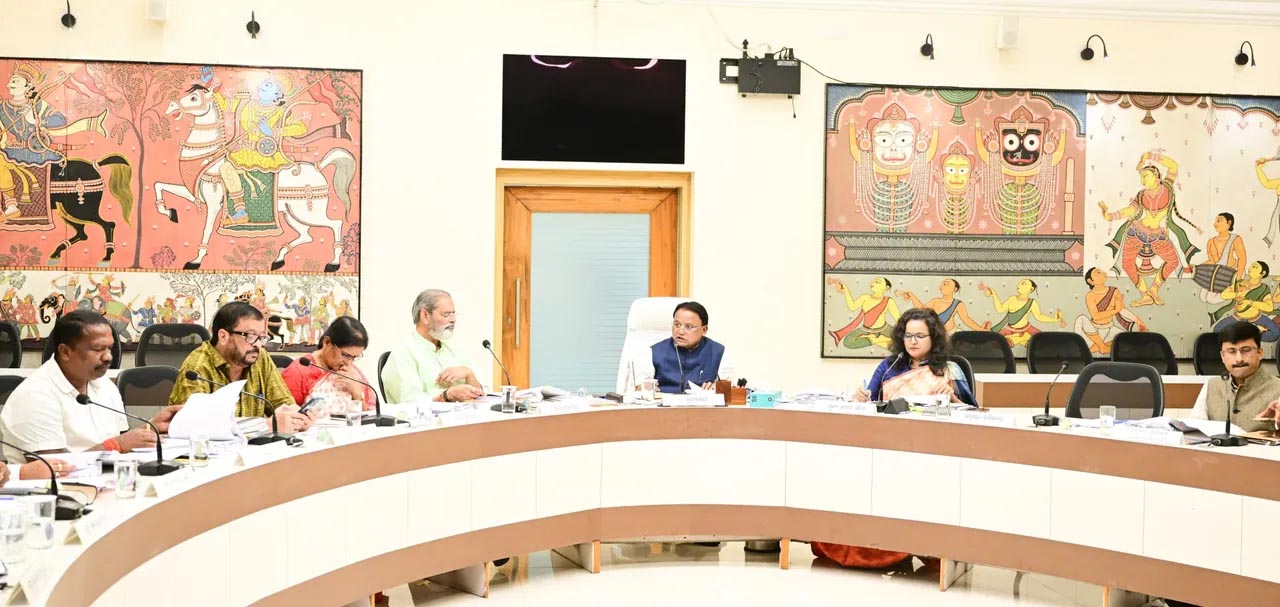
Bhubaneswar. Taking a big decision in the interest of the farmers of the state, the Odisha government has approved the new food and paddy procurement policy for Kharif Marketing Season (KMS) 2026-27. This comprehensive policy was approved in the state cabinet meeting chaired by Chief Minister Mohan Charan Majhi on Monday. The main objective of the new policy is to bring transparency in the paddy procurement process, ensure timely payment to farmers and better protect their interests. The government has set a target of purchasing 53 lakh metric tonnes of rice this season, which is equivalent to approximately 78 lakh metric tonnes of paddy. Along with this, it has been decided to give Rs 3,100 per quintal to the farmers including minimum support price and input assistance.
The new paddy procurement policy of the Odisha government is being considered an important decision for the farmers. For farmers cultivating paddy in the state, government procurement system is a major means of ensuring fair price for their produce. In such a situation, the government has laid special emphasis on making the procurement process more transparent and systematic. In the cabinet meeting chaired by Chief Minister Mohan Charan Majhi, decisions were taken on many important issues ranging from payment to farmers to verification process.
According to the new policy, the state government has set a target to purchase a total of 53 lakh metric tonnes of rice in the Kharif marketing season 2026-27. This quantity will be equivalent to approximately 78 lakh metric tons of paddy. This target set by the government reflects the comprehensive nature of the paddy procurement system in the state. During the procurement process, the produce of the farmers will be purchased under the prescribed arrangement.
The most important announcement of this policy for farmers is the price of paddy. The state government has clarified that farmers will be given Rs 3,100 per quintal including the minimum support price i.e. MSP and input assistance. With this decision, farmers will receive a fixed amount in exchange for their produce. The aim of the government is to provide financial assistance to the farmers and make the paddy procurement system more effective.
In the paddy procurement policy, special priority has also been given to ensuring timely payment to farmers. It is important for farmers to receive payment after selling their crops. Keeping this in mind, the government has emphasized on developing such a system in the procurement process, so that the payment related process can become more systematic and transparent. The purpose of including technical arrangements in the new policy is also to strengthen this process.
The government has approved several technical measures to increase transparency and prevent irregularities in paddy procurement. Among these, Paddy Procurement Automation System i.e. P-PAS has been given prominence. Arrangements have been made to link this system with Aadhaar e-KYC, Bhulekh and National Payments Corporation of India i.e. NPCI. The mutual integration of these technological means is expected to help in improving the processes related to verification and payment of farmers.
Identity of farmers can be verified through Aadhaar e-KYC. This will help in confirming the identity of the concerned farmer during paddy procurement. The information related to Bhulekh i.e. land records can be used in verification of land related details. The objective of linking these two systems with the paddy procurement system is to ensure greater transparency in the process.
Linking the system with National Payments Corporation of India can help in verification of payment related information and improve the process. The government is trying to ensure that farmers get the prescribed amount on time after selling their produce. For this, better coordination has been planned between the technical systems related to procurement and payment.
The decision to link PADI Procurement Automation System with other technological means is an important part of the new policy. This will enable verification of available information at various stages of the procurement process in a more effective manner. The objective of the government is to ensure that the scope for irregularities in the paddy procurement system is reduced and the concerned farmers get benefits as per the prescribed procedure.
Ensuring transparency in paddy procurement is one of the major priorities of the government. Any irregularities in the procurement process can affect the interests of farmers. For this reason, special importance has been given to technical verification in the new policy. Information related to Aadhaar e-KYC, land records and integration of payment systems can be verified in a more systematic manner.
Approval of this policy in the cabinet meeting chaired by Chief Minister Mohan Charan Majhi is an important decision related to the agriculture sector of the state. Along with setting clear targets for paddy procurement, the government has taken steps towards improving the system of payment and verification of farmers. In this decision, importance has been given to the economic interests of farmers and transparency of the procurement process.
The target of 53 lakh metric tonnes of rice procurement set for Kharif marketing season 2026-27 in Odisha is an important part of the government’s plan. This is equivalent to approximately 78 lakh metric tons of paddy. For procurement of this quantity, the role of systematic process and technical verification will be important. Keeping this need in mind, the government has included digital systems in the new policy.
The announcement of giving Rs 3,100 per quintal to farmers is also a major attraction of this policy. This amount is determined by combining minimum support price and input assistance.