Maharashtra: The government has approved the much-awaited Bhayandar-Ghodbunder connectivity project in the Mumbai Metropolitan Region. This major infrastructure project aims to alleviate traffic congestion in the area and facilitate smoother travel. It is viewed as a significant transformation for the transport infrastructure of the Mumbai Metropolitan Region.
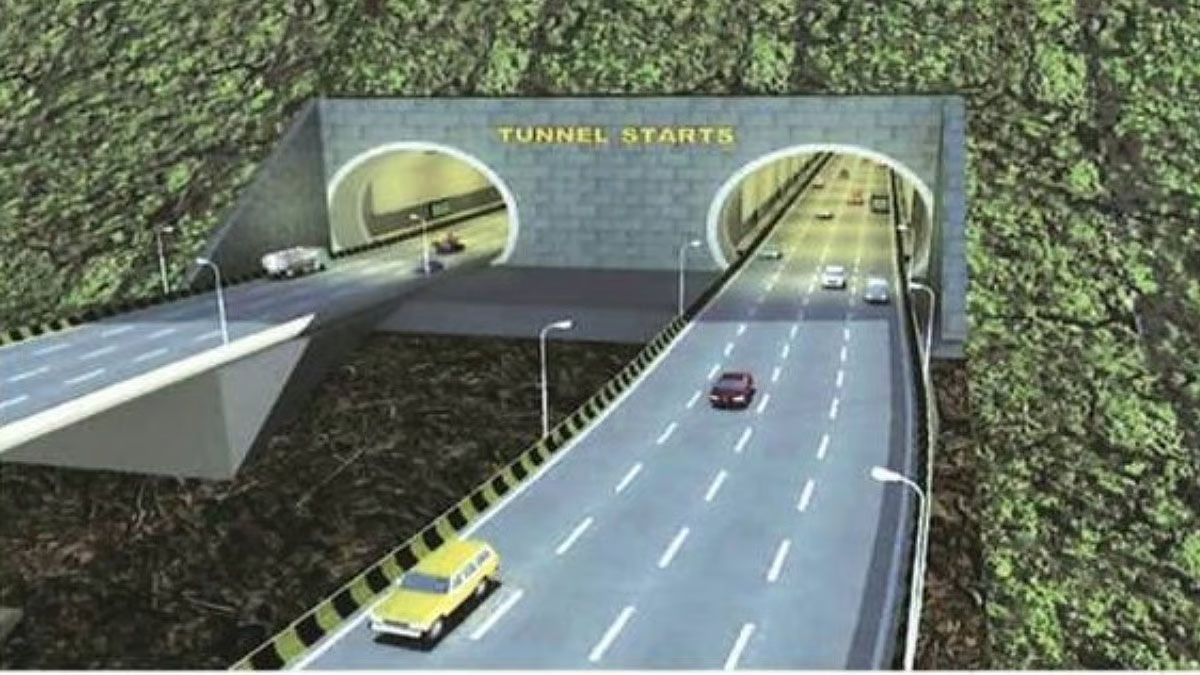
The project comprises two key components. First, an elevated creek bridge will be constructed from Bhayandar to Fountain Hotel Junction. Second, a twin-tube underground tunnel will be built from Fountain Hotel Junction to Gaimukh. The total estimated cost of the entire project is ₹17,036.03 crore.
Spanning a total length of 15.44 kilometers, the project will be developed by the Mumbai Metropolitan Region Development Authority (MMRDA) under a Public-Private Partnership (PPP) framework using the “Build-Operate-Transfer” model. Under this model, a private partner will handle construction and operations, with the project being transferred to the government after a specified period.
According to a government order, the Urban Development Department formally approved the project on June 22 following clearance from the Cabinet Infrastructure Committee. Previously, the tender process for the project had been cancelled, leading to legal disputes.
Reports indicate that the MMRDA had cancelled the project’s earlier tender process about two years ago. Subsequently, Larsen & Toubro (L&T) challenged this decision in the Bombay High Court. The matter eventually reached the Supreme Court. Both courts upheld the MMRDA’s decision, thereby clearing the way for the project to proceed.
This project is considered crucial given the mounting traffic pressure in Mumbai and its surrounding areas. A large volume of vehicles commutes daily between the Bhayandar and Ghodbunder regions, resulting in persistent traffic congestion on existing roads. The construction of the elevated creek bridge and underground tunnel is expected to reduce travel time. Additionally, the project will provide improved connectivity between industrial and residential areas, thereby boosting economic activity.
According to MMRDA officials, the project will be executed using modern technology and engineering to ensure long-term durability and safety. Upon completion, it could emerge as one of the most significant traffic corridors in the Mumbai Metropolitan Region.
The government believes that this project will not only improve the traffic system but also accelerate regional development. Furthermore, it is expected to generate new investment and employment opportunities in the surrounding areas.
Experts state that major connectivity projects of this nature are crucial for a metropolis like Mumbai to meet future demands, as the existing infrastructure is under strain due to the ever-increasing population and number of vehicles.
Currently, the detailed design and construction process for the project are being finalized. The subsequent stages involving tendering and construction work are likely to commence soon.