
Arunachal: Meeting of stakeholders on reducing fertilizer usage
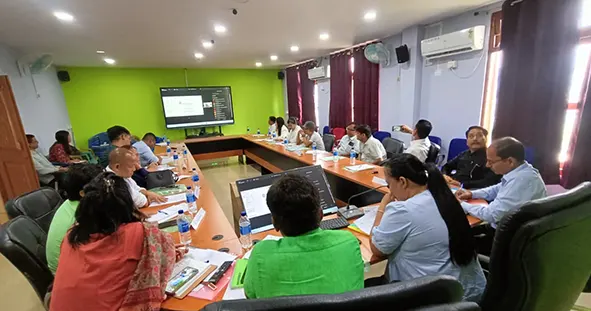
BASAR: A ‘stakeholders’ meeting on the current status of fertiliser usage in agriculture and strategies to reduce its application in Arunachal Pradesh’ was organised in the hybrid mode by the ICAR Research Complex for NEH Region, Arunachal Pradesh Centre here in Leparada district on Friday.
The meeting brought together policymakers, scientists, academicians, extension personnel and development agencies to discuss strategies on improving nutrient-use efficiency and promoting sustainable agricultural practices in Arunachal.
The programme was attended by Agriculture Director Toggul Pertin Perme, Joint Director (MCP) Nokliam Sumnyan, Deputy Director (PP) Maze Piel, Agriculture Development Officer B Taggu, Umiam-based ICAR Research Complex for NEH Region Head Dr BP Singh, West Siang KVK Head Dr Manoj Kumar, and other stakeholders.
In his welcome address, agronomy senior scientist Dr SK Pandey highlighted the need for a coordinated approach to ensure balanced nutrient management in the state. This was followed by a presentation by soil science expert Dr Ampee Tasung, who outlined the objectives and the proposed action plan for assessing fertiliser usage patterns and developing strategies for reducing excessive dependence on chemical fertilisers.
ICAR AP Centre Head (i/c) Dr Doni Jini emphasised the importance of balanced fertiliser use for sustaining agricultural productivity while safeguarding environmental health. He also provided an overview of fertiliser management practices during the rabi and kharif seasons, and underscored the need for efficient nutrient-use practices.
Dr BP Singh highlighted the significance of the Khet Bachao Abhiyan and the initiatives undertaken by the ICAR to promote quality food grain production through judicious fertiliser use. He stressed the importance of collecting baseline information on fertiliser types, application doses, and soil quality parameters for formulating location-specific fertiliser recommendations in Arunachal. He further urged KVKs and the Agriculture and Allied Departments to take proactive initiatives for data collection and analysis for preparing a comprehensive action plan.
Agriculture Director Toggul Pertin Perme informed the gathering that six districts of the state recorded comparatively higher use of chemical fertilisers, particularly districts bordering Assam. She also shared various government initiatives aimed at reducing chemical fertiliser use through integrated nutrient management, biofertilisers, composting, vermicomposting, and soil test-based nutrient management practices.
Deputy Director (PP) Maze Piel said that, although the state is largely organic by default, certain commercial crops such as oil palm and tea require judicious application of chemical fertilisers to sustain productivity. He assured that the government is actively promoting balanced fertiliser use through scientific soil testing and nutrient management approaches.
Leparada SDAO Jarny Yomcha suggested conducting more awareness and training programmes on natural and organic farming. He further emphasised the importance of crop rotation and diversified farming systems in maintaining soil fertility and ecological balance.
Kari Kamum Basar from the Basar market informed the house that fertiliser consumption in Leparada district remains comparatively low, and that farmers predominantly use DAP, followed by urea.
Representatives of farmers and FPOs, including Yumka Doyom and Nyomar Nyodu, stated that most farmers in Leparada district practice natural farming, particularly in paddy cultivation. They also sought technical guidance for managing insect infestations in agricultural crops.
Assistant Soil Conservation Officer Bhanu Ribapresented the ongoing soil conservation programmes and explained their implementation at the field level. M Karlo from the ArSRLM highlighted the potential of biofertiliser and vermicompost production in reducing chemical fertiliser use, and suggested establishing community-level biofertiliser production units and conducting more field demonstrations.
District Veterinary Officer Dr Lige Bagra elaborated the role of livestock-based farming systems in maintaining soil fertility and promoting sustainable agriculture. He also highlighted the adverse effects of indiscriminate use of chemical insecticides and weedicides on the livestock sector, particularly dairy and goat farming.
DFDO Jumli Karga emphasised the importance of balanced and responsible fertiliser application to sustain agricultural productivity while minimising adverse impacts on the environment and allied sectors.
KVK Head Dr Manoj Kumar spoke on various farming systems for improving soil fertility, and advocated the adoption of green manuring and diversified farming practices. He cautioned against long-term mono-cropping, and stressed that integrated farming approaches are essential for maintaining soil health and productivity.
In his concluding remarks, Dr Jini urged all stake