
APSDMA trains officials to conduct glacial lake hazard surveys
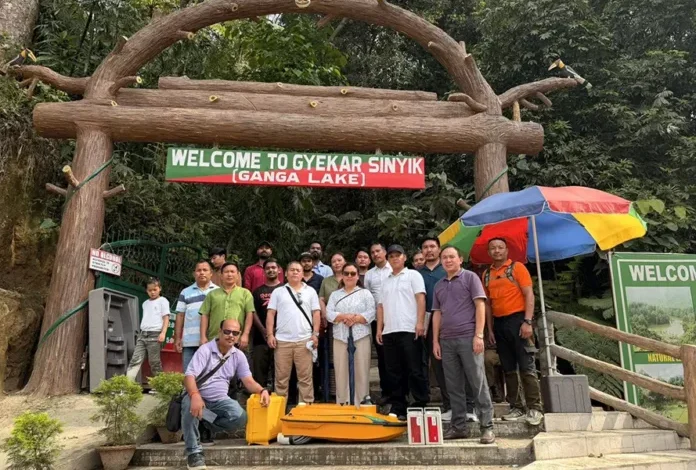
Itanagar: The Arunachal Pradesh State Disaster Management Authority (APSDMA) organized a three-day hands-on training program on the use of bathymetry survey devices to strengthen preparedness for glacial lake outburst floods (GLOFs) in the state. Currently, 32 high-risk glacial lakes have been identified in the state.
Organized under the National GLOF Risk Management Program (NGRMP), the training aims to enhance the technical capacity of officials and experts who will participate in the upcoming survey of high-risk glacial lakes in the state, an official statement said.
The program included theoretical sessions on the technical aspects of the bathymetry survey device, its operation, and applications, followed by practical demonstrations and field-based exercises on Ganga Lake, including data collection and processing.
Experts and officials from the India Meteorological Department (IMD), Geological Survey of India (GSI), Arunachal Pradesh Space Applications Centre (APSAC), Water Resources Department, State Disaster Management Authority (SDMA), and District Disaster Management Authorities participated in the training program.
Speaking on the occasion, the Joint Director of the APSDMA stated that bathymetric surveys are crucial for assessing the risks posed by vulnerable glacial lakes and planning mitigation measures.
He added that previous attempts to conduct bathymetric studies were unsuccessful due to administrative difficulties, forcing the APSDMA to procure its own bathymetry survey equipment.
The official also pointed out the lack of technical expertise in this field and sought cooperation from specialists from various departments for future surveys and mitigation efforts.
Emphasizing the need for a scientific assessment of glacial lake stability, he strongly advocated for conducting Electrical Resistivity Tomography (ERT) studies to examine the internal structure and stability of moraine dams surrounding glacial lakes.
He stated that such studies are essential for effective disaster risk management and the design of appropriate risk mitigation measures, and appealed to the relevant departments to support the APSDMA in conducting ERT studies.
This initiative is part of the APSDMA’s comprehensive strategy to enhance preparedness against potential GLOF events amid growing concerns about the increasing size of many glacial lakes and the threats they pose to downstream communities.