
Amritsar: The rise and fall of Nestha, from glory to total neglect
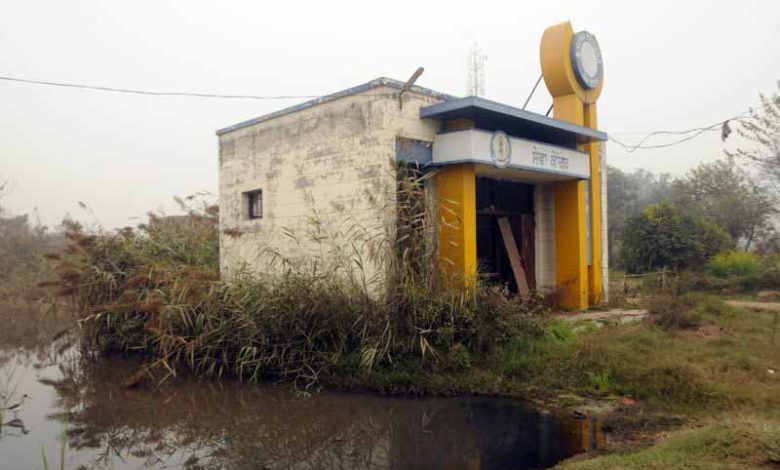
Punjab: Neshta village, once a popular stopover for travelers between Amritsar and Lahore, is now in obscurity. Located equidistant from both Amritsar and Lahore, Neshta has struggled with its unique location, causing it to fluctuate. This unique location has been beneficial to Attari. Once a bustling place, it was a major trade center. Partition devastated the town, which has now dwindled to a small village. Maharaja Ranjit Singh donated a hundred acres of land for the village’s old temple. Its service center, built a few years ago, lies in disrepair, with a pool of sewage pooled on one side of the building. Over the years, government policies, sudden events like Partition, and decades of terrorism have impacted the village’s fortunes.
Village resident Sarabjit Singh said that before Partition, Neshta’s market was popular after Lahore. Back then, the population was predominantly Hindu and Muslim. Following Partition and communal unrest, Sikhs from Narwad village, now across a barbed wire fence in Pakistan, settled here. According to them, the village’s significance can be gauged from the fact that Sunil Dutt and Nargis performed a play, “Hindi-Chini Bhai Bhai,” here in 1962. After experiencing many ups and downs, the next turmoil came during the more than decade-long period of terrorism, when most Hindu families involved in business migrated to the holy city. From a once-prosperous village, Neshta has become a victim of circumstance.
It is said that Neshta’s residents lived within a walled and gated area, with four large doors that would close after sunset to protect residents from any external mischief. Now, only ruins and remnants of the building remain underground. Elders say they saw the ruined doors as children. Indo-Pak wars have always disturbed the daily life of the village, which is just two km from the border. Pragat Singh, 80, a resident of the village, said that during the 1965 war, his family suffered financial losses when their belongings were looted after they left their home and went to a relative’s place. During the 1971 Indo-Pakistani War, he camped in the village with some of his neighbours to avoid a repeat of the previous experience, while his family members moved to safer places. Shamsher Singh, another resident of Pakka village, said that they moved to safer places after the Pulwama terror attack on a CRPF convoy in 2019.