Uttar Pradesh: Political activity has intensified ahead of the assembly elections. A direct contest is anticipated between the BJP-led NDA and the SP-Congress-led INDIA alliance. Both alliances are busy strengthening their respective strategies. Amidst this, political rhetoric regarding seat-sharing has also heated up.
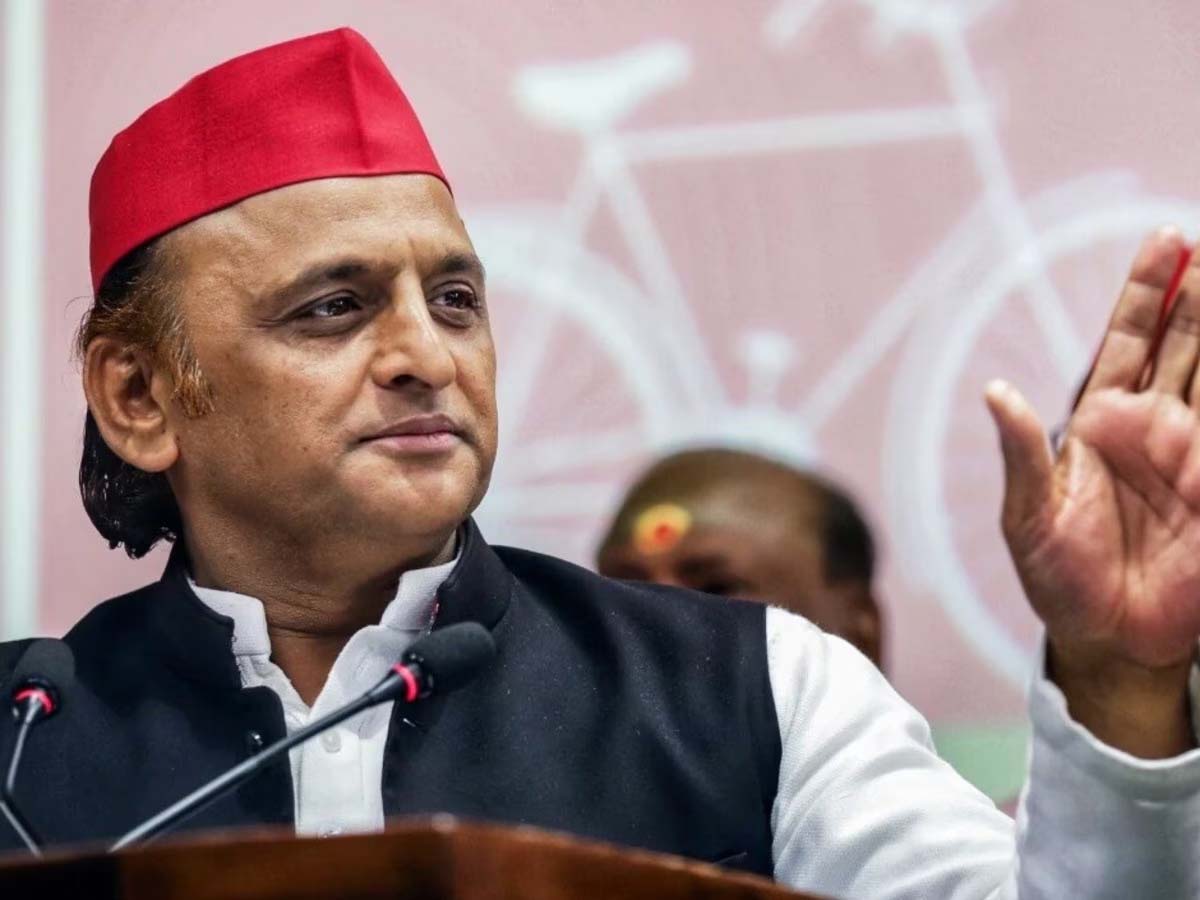
Samajwadi Party President Akhilesh Yadav has made a significant claim regarding the NDA’s alliance partners. He stated that the Bharatiya Janata Party (BJP) is preparing to allocate a large number of seats to its smaller allies. He claimed that, fearing the ‘PDA’—an equation comprising Backward classes, Dalits, and Minorities—the BJP has earmarked a total of 162 seats for its allies.
Targeting the BJP while citing figures for the potential seats to be allocated to smaller NDA allies, Akhilesh Yadav remarked that the BJP perceives its position as weak and is therefore preparing to enter the electoral fray relying on its allies.
According to Akhilesh’s claim, the Rashtriya Lok Dal (RLD)—an NDA partner—is set to receive the highest number of seats at 73. Additionally, there is talk of allocating 39 seats to Om Prakash Rajbhar’s Suheldev Bharatiya Samaj Party (SBSP), 31 seats to Sanjay Nishad’s Nishad Party, and 19 seats to Anupriya Patel’s Apna Dal (S).
However, there has been no official confirmation of these seat figures from the BJP or its allies. Discussions regarding seat-sharing are currently underway within the alliance, and a final decision will be taken after considering electoral dynamics.
Attacking the BJP, Akhilesh Yadav stated that the NDA fears the growing strength of the PDA. He claimed that the people of Uttar Pradesh desire change and that the backward, Dalit, and deprived sections support the INDIA alliance.
Meanwhile, the BJP has consistently maintained that its alliance is strong and that all allies will work together to deliver a strong performance in the elections. BJP leaders assert that the public will once again extend its support based on the NDA government’s policies and development initiatives.
Small parties have always played a significant role in Uttar Pradesh politics, where caste and regional dynamics influence election outcomes. Consequently, both the BJP and the Samajwadi Party are striving to bring smaller parties into their respective alliances to strengthen their positions.
The Rashtriya Lok Dal (RLD) is considered influential in Western Uttar Pradesh, while the Nishad Party holds sway over the Nishad community. Apna Dal (S) maintains a strong foothold among the Kurmi community, and the Suheldev Bharatiya Samaj Party (SBSP) plays a pivotal role in the politics of the Purvanchal region. Against this backdrop, both major alliances are attempting to reach out to diverse social groups through these parties.
The Samajwadi Party had previously devised its electoral strategy by forging alliances with smaller parties. This time, too, the party is preparing to challenge the BJP in collaboration with the Congress. Meanwhile, the BJP is aiming to balance new social equations while retaining its existing allies.
There are a total of 403 seats in the UP Legislative Assembly, with a majority of 202 seats required to form the government; this makes the political significance of every single seat immense. The allocation of seats to alliance partners is considered a crucial component of the electoral strategy.
Currently, following a statement by Akhilesh Yadav, discussions regarding seat-sharing have intensified within UP political circles. The picture regarding seat allocation is expected to become clearer in the coming days as the BJP and its allies finalize their plans. Amidst these shifting electoral dynamics, all eyes are fixed on alliance strategies and the selection of candidates.