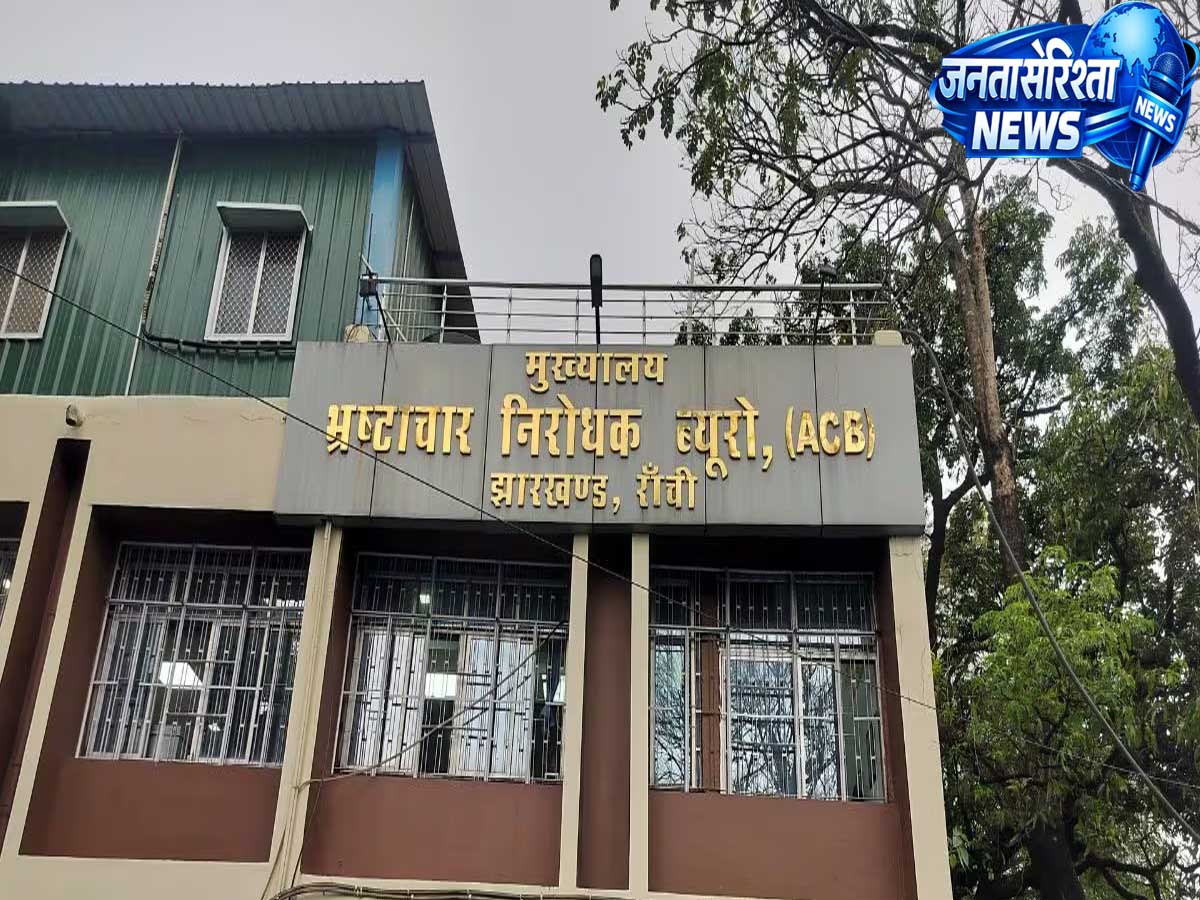
Jharkhand: The Anti-Corruption Bureau (ACB) has taken significant action regarding the high-profile Namkum land scam in Jharkhand. The agency has registered a Preliminary Enquiry (PE) against the former Circle Officer (CO), Shweta Verma, and a revenue official in connection with the case. This move marks a new turn in the investigation.
The ACB aims to determine whether there were any irregularities, violations of rules, or abuse of office regarding land-related records, Dakhil-Kharij (transfer of title), mutation, or other administrative procedures. Currently, the matter is in the initial stage of investigation, and the agency is scrutinizing available documents and evidence.
What is the Namkum land scam?
Questions have long been raised regarding alleged irregularities in land-related documents, changes in ownership, and revenue records in the Namkum area. It is alleged that in certain instances, land-related procedures were completed without adhering to government regulations, potentially compromising government interests.
Based on these allegations, an examination of the relevant documents and records was initiated. The ACB has now registered a Preliminary Enquiry to ascertain whether corruption or administrative irregularities took place.
What is a Preliminary Enquiry (PE)?
A Preliminary Enquiry (PE) is an investigation conducted prior to the direct registration of an FIR in any case. Its objective is to examine available facts and documents to determine whether sufficient grounds exist to register a criminal case.
During this process, the investigating agency—
Examines relevant documents.
Evaluates the roles of officials and employees.
Cross-verifies records and revenue documents.
Seeks information from concerned individuals, if necessary.
If sufficient evidence is found during the inquiry, a regular case (FIR) may subsequently be registered.
What aspects will be investigated?
During the Preliminary Enquiry, the ACB may investigate several key aspects, including—
The process of altering land records.
Documents related to Dakhil-Kharij and mutation.
The roles of the concerned officials. Whether government regulations were followed.
The possibility of undue advantage being extended to any individual.
Alleged irregularities in revenue records.
Further action will be determined based on the findings of the inquiry.
Documents to play a crucial role in the investigation
Documents are considered the most vital evidence in land disputes and land-related matters. The ACB may examine revenue records, file notings, official orders, mutation registers, and other government documents.
If any discrepancies in the records or indications of rule violations are found, the scope of the investigation could be expanded.
What does the legal process entail?
The registration of a preliminary inquiry does not imply that guilt has been established; it is merely a stage for examining the facts.
Under Indian law—
Every accused person has the right to a fair investigation.
Allegations are substantiated based on evidence.
The final verdict is delivered by the court.
Further legal action is determined only after the investigation concludes.
Increased strictness in corruption cases
In recent years, investigative agencies have become more active regarding cases involving government land, revenue records, and public property. Irregularities are being identified more effectively than before, aided by digital records, online land databases, and modern investigative techniques.
Experts believe that such inquiries can help enhance transparency and accountability within the government land management system.
What happens next?
The ACB will now conduct a detailed examination of the relevant documents and available evidence as part of the preliminary inquiry. If the inquiry yields sufficient prima facie evidence of a criminal act, the agency may register a formal FIR and initiate a full-scale investigation. Conversely, if sufficient grounds are not found, the inquiry will proceed accordingly.