Astrology News: The holy month of Sawan begins on July 30. During this period, devotees of Lord Shiva perform Jalabhishek (ritual offering of water) on Shivlings at local temples. Many also visit temples renowned for their special significance and association with the glory of Lord Shiva.
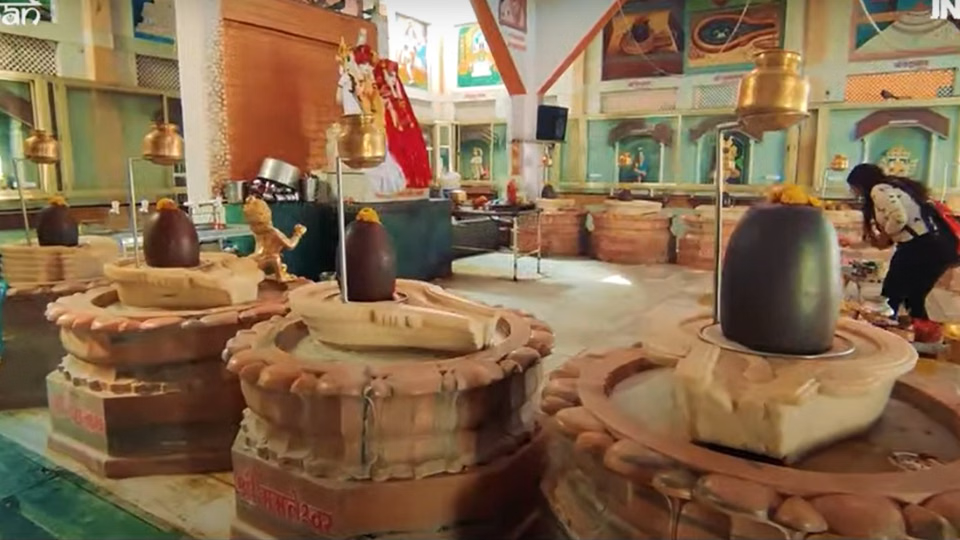
One such unique temple is located in Shivkuti, Prayagraj; it houses so many Shivlings that it is nearly impossible for anyone to count them accurately. No matter how learned or knowledgeable a person may be, they always fail to arrive at the exact count.
The ‘Shiv Kachahari Mahadev’ temple was established in 1865 by Rana General Padam Jung Bahadur of the Nepalese royal family. Due to the vast number of Shivlings concentrated in one place, it is known as ‘Lord Shiva’s Kachahari‘ (Court).
The count of the Shivlings varies each time—sometimes 243, sometimes 245, and at other times reaching up to 283. This mystery adds to the temple’s unique allure. Shivlings representing all forms of Lord Shiva are present here, making it a truly wondrous and divine destination for devotees.
During the month of Sawan, thousands of devotees visit this unique temple daily to seek Darshan of Lord Shiva and perform Jalabhishek. People travel from far and wide to perform religious rituals, making the site a major center of faith during Sawan.
Deepak Ji Maharaj, the priest of the Shiv Kachahari temple, describes the temple as a symbol of faith and devotion. Lord Mahadev showers His blessings upon those who bow their heads here with a sincere heart. Devotees express their wishes by offering Belpatra (wood apple leaves) and performing Jalabhishek, and their prayers are often answered. This is why the temple becomes a focal point of faith during the month of Sawan.
Deepak Ji Maharaj notes that, to this day, no one has succeeded in counting the exact number of Shivlings present in the Shiv Kachahari temple. People have attempted to count them several times, yet the number varies—sometimes 243, other times 283. The priests attribute this to a miracle of Lord Shiva, stating that the number of Shivlings here changes spontaneously—a unique feature of this site.
The temple houses Shivlings representing various forms of Lord Shiva, such as Chandreshwar, Siddheshwar, Nageshwar, and Shahid Bhagwan. Legend has it that after returning to Ayodhya, Lord Ram incurred the sin of Brahma-hatya (the killing of a Brahmin) for slaying Ravana. To cleanse himself of this sin, he installed a Shivling at this very spot and performed Jalabhishek (the ritual of bathing the deity with water) along with other acts of worship. Consequently, this site holds immense religious significance.
At that time, Maharshi Bharadwaj advised Lord Ram to install ten million Shivlings across the earth and worship them according to prescribed rituals; only then would he be absolved of the sin of Brahma-hatya. Acting on this counsel, Lord Ram installed the Koteshwar Mahadev Shivling near the Shivkachhari temple in Prayagraj. To this day, the site remains a center of faith and miracles for devotees.