
After 31 years, the BJP’s stronghold in Bankipur collapses.
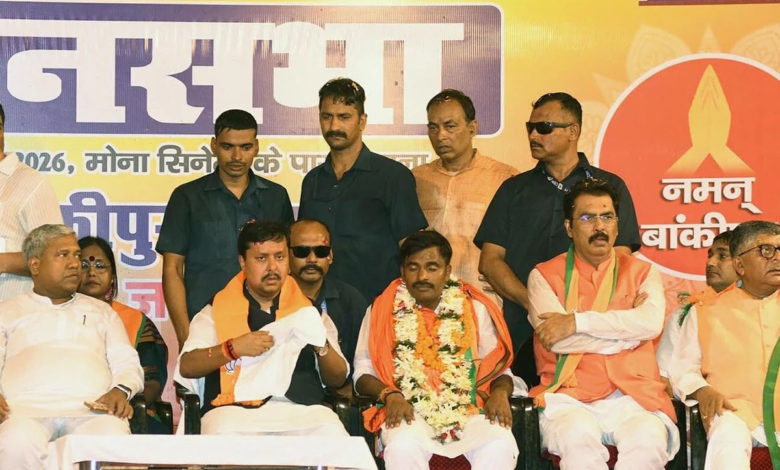
Patna. The results of the by-election for the Bankipur Assembly seat—considered crucial in Bihar politics—have sparked a new debate regarding the state’s political landscape. Political analysts view the defeat on this seat, long considered a stronghold of the Bharatiya Janata Party (BJP), not merely as the outcome of a single by-election, but as an indicator of shifting voter trends and political priorities. Losing this seat, which had been held by the BJP for nearly 31 years, is seen as a major political setback for the party.
For years, the Bankipur Assembly constituency was regarded as an impregnable BJP bastion. The party had consistently maintained its grip on this area, which has a large urban electorate; consequently, a BJP victory here was often considered a foregone conclusion. However, this by-election completely altered that perception, making it clear that no political stronghold can be considered permanently secure.
Political observers believe that the Bankipur election result represents more than just a statistic for a single seat; it reflects the changing political mindset in Bihar. Through their votes, urban electors have signaled that traditional political equations or caste-based calculations no longer guarantee electoral success. Voters have begun to place greater importance on development, the resolution of local issues, the accountability of elected representatives, and effective leadership.
According to analysts, voters in urban areas like Bankipur prioritize issues such as roads, traffic, drinking water, sanitation, healthcare, education, and employment. If the public does not receive the expected development and effective representation, they do not hesitate to vote against a party that has held power for a long time. The election result is being viewed in this very context.
The current form of the Bankipur Assembly constituency emerged following the delimitation exercise in 2008. Prior to this, the area was known as the Patna West Assembly constituency. After delimitation, it was renamed Bankipur and has since become one of Bihar’s most prominent urban seats. Encompassing a major part of the capital, Patna, this seat has always held significant political importance. This region has a significant number of voters belonging to educated, middle-class, business, government employee, youth, and professional demographics. Consequently, the electoral issues here differ from those in rural areas. Political parties must pay special attention not only to caste equations but also to urban development, civic amenities, and administrative accountability.
Regarding the BJP’s defeat, political analysts suggest the party needs to learn from this outcome. Even when a party holds a strong grip on a region for a long time, any slackening in organizational efforts or public outreach—or a failure to meet local public expectations—inevitably reflects in the election results. In this context, introspection and a strategic shift are considered essential for the party.
Experts also believe that voter priorities in Bihar politics are gradually shifting. While caste and traditional political equations once heavily influenced election results, issues such as development work, the proactivity of local leadership, and public outreach are now becoming increasingly significant. The Bankipur result is viewed as a key example of this transformation.
Although it would be premature to treat the by-election results as a direct indicator of the upcoming assembly elections, the outcome certainly serves as a warning for political parties. The BJP now faces the challenge of bolstering its organizational strength, keeping local cadres active, and rebuilding voter trust. Meanwhile, opposition parties may view this victory as an opportunity to create a favorable political atmosphere.
Political observers note that voter sentiment in urban areas is shifting rapidly. Thanks to social media, digital communication, and easy access to information, voters are far more aware than in the past. They constantly evaluate the performance of the government and elected representatives, basing their decisions on these assessments.
For now, the Bankipur by-election result remains a major topic of discussion in Bihar politics. The defeat on this seat—long considered a BJP stronghold—sends a clear message that in a democracy, no political base is permanent. The public periodically evaluates its representatives and does not hesitate to decide on a change if expectations are not met. In the near future, this outcome could significantly impact state politics and the electoral strategies of various parties.