
Will getting a tattoo cost you a government job? Know the rules for various recruitments
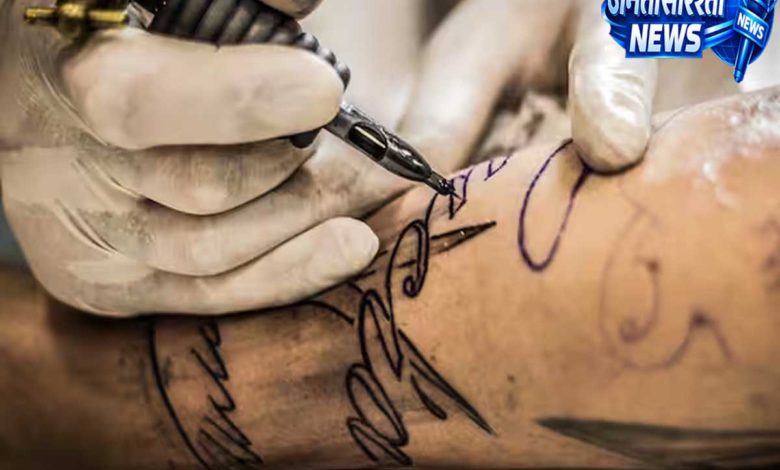
UTTAR PRADESH: The trend of getting tattoos is rapidly growing among the youth these days. Many people get tattoos on various parts of their bodies to express fashion, style, and personal preferences. However, if you aspire to secure a government job, it is crucial to be aware of the associated rules before getting a tattoo.
A common question asked is whether having a tattoo prevents one from getting a government job. There is no simple ‘yes’ or ‘no’ answer to this. Different government departments and services have varying regulations regarding tattoos. Some services permit tattoos in limited and specific locations, whereas strict criteria apply in certain sensitive services.
Let us look at the rules regarding tattoos in various government jobs.
Are tattoos prohibited in all government jobs?
No. There is no uniform rule for all government jobs in India.
In many departments, having a tattoo poses no issue; however, specific guidelines regarding tattoos apply to the Indian Armed Forces, paramilitary forces, and certain uniformed services.
Therefore, it is essential to carefully read the official recruitment notification before applying.
What are the rules regarding tattoos in the Army?
The Indian Army has clear guidelines concerning tattoos.
Generally—
Limited tattoos on the inner forearm may be permitted.
Tattoos on the back of the palm may be acceptable in certain cases.
Tattoos associated with religious or tribal traditions may be permitted under special circumstances.
Large or conspicuous tattoos on other parts of the body can create problems during the recruitment process.
Tattoos are examined during the medical examination.
Rules in Police and Paramilitary Forces
Rules regarding tattoos in state police forces and Central Armed Police Forces (CAPFs) may vary depending on the recruiting agency. In some recruitment processes—
Tattoos featuring obscene, offensive, or violent messages are not accepted.
Large tattoos on the face, neck, or easily visible areas may be grounds for objection.
In many recruitment drives, the medical board makes a decision based on the nature and location of the tattoo.
Also Read – Woman found with lover after three years; her statement will now be the crucial link in the police investigation.
What are the rules for UPSC and other civil services?
If you are preparing for UPSC, SSC, banking, railways, State Public Service Commissions, or most administrative services, a tattoo is generally not a cause for disqualification in itself.
However—
The nature of the tattoo must not be offensive.
If the job involves a specific dress code or medical standards, additional rules may apply.
Which tattoos can cause problems?
In government services, tattoos can specifically become problematic if they—
Are obscene or indecent.
Convey communal or hate-filled messages.
Promote violence or illegal activities.
Cover the entire arm, neck, or face.
Are considered contrary to standards of professional conduct.
How are tattoos examined during the medical test?
For recruitment into uniformed services, the medical board inspects the candidate’s tattoos.
During the examination, the following are checked—
The location of the tattoo.
Its size.
Its message or design.
Whether it complies with the recruitment rules.
If the tattoo violates recruitment rules, the candidate may be declared ineligible.
What should you keep in mind before getting a tattoo?
If you aspire to a government job in the future—
Make sure to read the official recruitment notification.
Avoid getting tattoos on parts of the body that are always visible.
Avoid tattoos with offensive designs or messages.
Check the rules of the specific service before getting a permanent tattoo. If you aim to join the army or police, exercise special caution regarding tattoos.
Does removing a tattoo resolve the issue?
In some cases, candidates opt for tattoo removal; however, if visible scars remain after the procedure, the medical board may examine them as well.
Therefore, it is advisable to seek expert advice and familiarize yourself with the relevant recruitment rules before getting a tattoo or having one removed.