
The fusion of technology with traditional knowledge will make India a global leader: Bansal
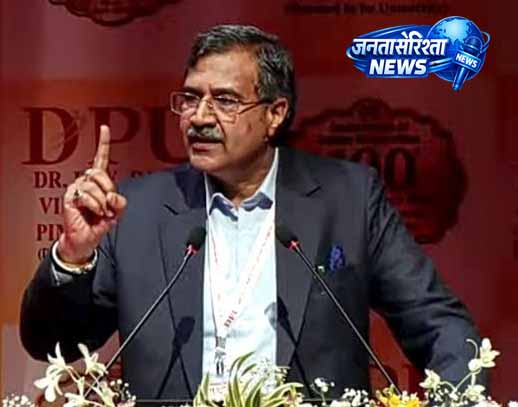
Himachal Pradesh: Championing a fresh perspective within India’s education and innovation landscape, a senior university head—Vice-Chancellor (VC) Bansal—stated that the convergence of traditional knowledge systems and modern technology is what will propel India toward global leadership. He believes that the right blend of the country’s cultural heritage and science can solidify India’s identity on the global stage. VC Bansal articulated this view during an academic conference and innovation workshop attended by representatives from various universities, research institutions, and industry experts. He highlighted that Indian society possesses a vast wealth of ancient knowledge, manifested across diverse fields such as Ayurveda, agriculture, astronomy, yoga, and architecture.
If integrated with technological innovation, this wealth of knowledge could position India as a frontrunner in global competition. He remarked, “Today, the world is undergoing a phase of rapid digital and technological transformation. In this evolving landscape, integrating our traditional knowledge systems with technology holds the key to success. This will not only create opportunities for Indian youth but also significantly enhance the country’s research and development capabilities.” Citing examples, VC Bansal noted that the fusion of traditional knowledge and technological innovation could yield tangible and sustainable solutions in sectors such as agriculture, healthcare, energy, and the environment. He added that, through digital platforms, artificial intelligence, and data science, traditional knowledge can be presented in a manner that aligns with global standards.
Addressing the audience, VC Bansal emphasized that this is not merely an academic perspective but also an integral part of a national strategy. He urged universities and research institutions to strive to preserve traditional knowledge while simultaneously leveraging modern technology to disseminate it on a global scale. Experts believe that this approach will further bolster India’s global image. VC Bansal further asserted that the synergy between traditional knowledge and technology will not only foster growth in research and innovation but also make significant contributions to the country’s economy, healthcare sector, and social development. Students, researchers, and industry representatives participating in the event also engaged in discussions regarding this vision. Many expressed the view that this concept would inspire the youth to explore and understand ancient knowledge, and to apply it toward finding solutions to contemporary challenges. According to VC Bansal, this confluence paves the way for global competitiveness—bolstered by technical proficiency—while preserving the distinctiveness of Indian culture. This is not merely an academic initiative, but also a crucial component of the nation’s long-term strategy.