Punjab: India overtakes China to become world’s largest rice producer
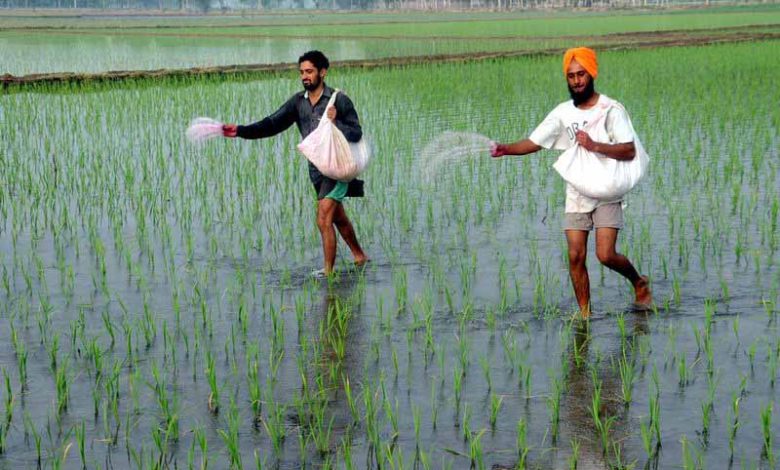
Punjab: Union Agriculture Minister Shivraj Singh Chouhan said in New Delhi on Sunday that India has surpassed China to become the world’s largest rice producer. By 2025, India’s production will reach 150.18 million tons, compared to China’s 145.28 million tons. This is a historic milestone in the country’s agricultural journey. Meanwhile, experts are emphasizing that emerging rice-growing states should learn from Punjab’s experience. After introducing 184 new varieties of 25 crops at an event, Chouhan said, “Surpassing China is a major achievement. We have completely replenished our grain reserves, and we are no longer dependent on others for survival. Today, we are a country that supplies rice to the world.”
Addressing scientists and agricultural experts, the minister said, “It is our duty to contribute our best to building a self-reliant and developed India.” Meanwhile, in an exclusive interview with The Tribune, Dr. Satbir Singh Gosal, Vice-Chancellor of Punjab Agricultural University (PAU), offered a more nuanced perspective—celebrating this success while cautioning about its ecological pitfalls. Gosal said the government is working to replicate Punjab’s success in eastern India and has launched a campaign called the “Green Revolution in Eastern India,” targeting states like Assam, Bihar, Chhattisgarh, Jharkhand, Odisha, eastern Uttar Pradesh, and West Bengal. “The government has promoted agriculture in these states with incentives, subsidies, and good quality fertilizers,” he said, adding that this effort aims to address the challenges facing rice-based cropping systems.
Calling Punjab a “national laboratory for agriculture,” Gosal emphasized that innovations were first tested in the state. He warned, “Punjab has already suffered losses due to depleting water levels. This pattern will now be repeated in other states, and cases of stubble burning will also emerge there.” Another reason for India’s record production is the adoption of high-yielding rice varieties. For example, PB126 matures in 123 days, is disease-resistant, and requires less water. PR131 and PB121 are also becoming popular in Punjab, Haryana, and Uttar Pradesh. “These varieties have increased yields while reducing water requirements, making them attractive to farmers in the northern states,” Gosal said. PAU is now working on developing flood-resistant rice varieties, aimed at supporting farming in flood-prone areas of eastern India. “These innovations will help maintain productivity while facing climate-related challenges,” Gosal added.