
OMG! When the sea blocked the path, the desert became an oil highway; Iraq changed its route
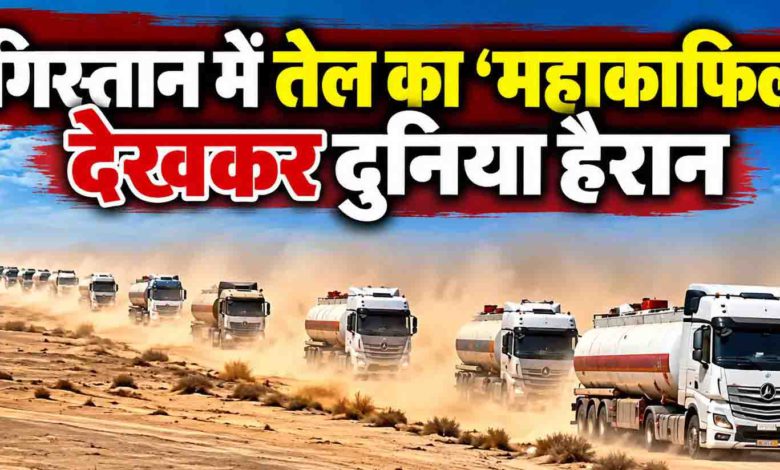
Baghdad. These days, the long lines of oil tankers kicking up dust as they traverse the desert resemble a scene from an action movie. Amidst disruptions in the Strait of Hormuz, Iraq has adopted an alternative route to maintain its oil exports. Under this arrangement, large numbers of oil tanker trucks are transporting oil via Syria to the port of Baniyas on the Mediterranean coast.
Iraq’s oil exports have historically relied heavily on maritime routes through the Persian Gulf. Faced with potential disruptions to oil flow caused by issues in the Strait of Hormuz, Iraq has established a new alternative via road. Oil-laden tankers cross the Syrian border and travel through desert regions to reach Baniyas.
This system involves the daily movement of hundreds—and at times even larger numbers—of tanker trucks. These vehicles enter Syria via the Al-Tanf and Al-Walid border crossings. After completing the long desert journey, the tankers arrive at the port of Baniyas, where the oil is loaded onto ships. From there, it is transported across the Mediterranean to European and other international markets. The objective of this alternative arrangement is to sustain oil exports while reducing reliance on the Persian Gulf and Strait of Hormuz routes.
However, transporting such large quantities of oil by road is not easy. The long distances drive up transportation costs. Additionally, managing the traffic flow of so many tankers presents a significant challenge. Risks of road accidents on desert routes and concerns regarding the security of the oil tankers further complicate the operation. Compared to maritime transport, moving oil by road requires a greater number of vehicles, drivers, and logistical arrangements. Maintaining the entire supply chain amidst the movement of thousands of tankers poses a significant challenge.
Nevertheless, under current circumstances, this route has emerged as a crucial option for Iraq to continue its oil exports. The long queues of tankers traversing the desert demonstrate the large-scale use of alternative transport systems to deliver oil to international markets when maritime routes are obstructed.