
New dress code implemented for priests at the Ram Mandir; all priests to appear in the Ramanandi tradition.
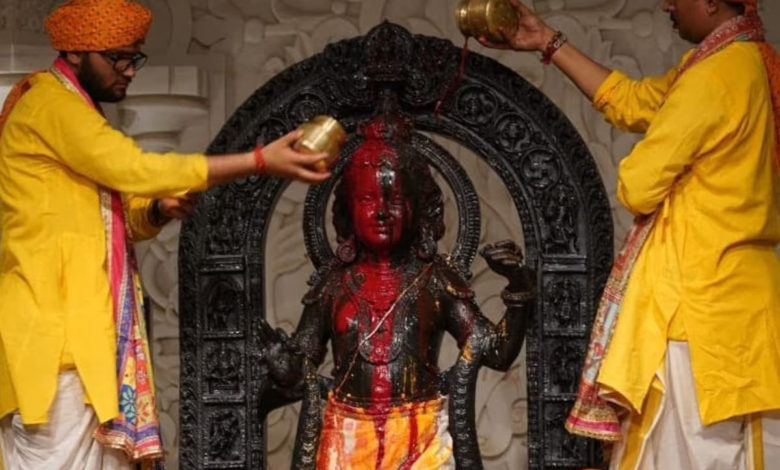
Ayodhya. A new dress code has been implemented for priests at the Shri Ram Janmabhoomi Temple in Ayodhya, Uttar Pradesh. Starting Saturday, all priests serving at the temple will be seen in a uniform traditional attire. According to Mithilesh Nandini Sharan, a member of the religious committee of the Shri Ram Janmabhoomi Temple Trust, the new attire has been determined in accordance with the Ramanandi tradition. Under this, priests will wear a light yellow silk dhoti and a matching silk uttariya (upper garment).
This decision is considered significant in the effort to give a traditional structure to the worship and religious rituals performed for Lord Ram Lalla at the Ram Temple. Previously, priests were seen performing rituals in varied traditional clothing, but with the new system in place, there will be uniformity in their attire. The dress code prescribed by the temple administration aims to bring greater order and structure to the worship arrangements, aligning them with religious traditions.
Mithilesh Nandini Sharan explained that the new attire was selected with the Ramanandi tradition in mind. The Ramanandi sect is considered to have a special connection with the worship of Lord Ram. In keeping with this tradition, the light yellow silk dhoti and uttariya have been designated for the priests; they will wear this specific attire while performing rituals.
In Sanatan Dharma, the attire of priests conducting worship in temples holds special significance. Across various religious traditions and sects, the priests’ attire is often prescribed alongside the specific methods of worship. The introduction of a uniform dress code for priests at the Ram Lalla temple in Ayodhya is a step taken in this very direction.
Since the construction of the Ram Temple and the Pran Pratishtha (consecration) of Ram Lalla in Ayodhya, specific rules have been established regarding the temple’s worship arrangements. Regular worship, Aarti, Bhog (offering of food), and other religious rituals for Ram Lalla are conducted according to prescribed schedules and procedures. Special training has been provided to the priests to ensure strict adherence to the temple’s worship protocols and religious traditions.
The introduction of a uniform dress code for the priests will lend a more traditional appearance to the temple’s religious operations. Priests will serve Lord Ram Lalla clad in light yellow silk dhotis and uttariyas (upper garments). In the Sanatan tradition, the color yellow holds special religious significance, symbolizing auspiciousness, knowledge, and spirituality.
Every day, a large number of devotees from across the country arrive at the Ram Temple to seek the blessings of Lord Ram Lalla. Arrangements for devotees are continuously being improved; changes have been implemented at multiple levels, ranging from the darshan (viewing) process and security to the distribution of prasad, the conduct of worship, and general amenities for visitors. Amidst these efforts, the introduction of a new attire for priests adds a sense of uniformity to the temple’s religious practices.
The Ramanandi tradition is considered one of the major religious traditions within the Vaishnava sect, placing special emphasis on the worship of Lord Ram and Lord Vishnu. As the birthplace of Lord Ram, Ayodhya has long been a key center of the Ramanandi tradition, hosting a large number of saints, mahants (heads of religious orders), and religious institutions associated with it. Consequently, the decision to align the priests’ attire at the Ram Janmabhoomi Temple with this tradition is viewed as religiously significant.
The priests appointed to serve Lord Ram Lalla at the Shri Ram Janmabhoomi Temple shoulder significant responsibilities. In addition to the deity’s daily worship, they must perform various religious rituals in strict accordance with prescribed protocols. The temple hosts a series of religious events throughout the day, ranging from Mangala Aarti (early morning ritual) to Shayan Aarti (nighttime ritual). The priests are also responsible for offering bhog (ritual food offerings) to Lord Ram Lalla and conducting special rituals on auspicious occasions.
A grand ceremony for the Pran Pratishtha (consecration) of the idol of Lord Ram Lalla was held at the Ram Temple on January 22, 2024, in the presence of Prime Minister Narendra Modi. Following this event, the temple has emerged as an even more significant religious and spiritual center in the country. Lakhs of devotees have visited Ayodhya to seek the blessings of Ram Lalla. Work on construction and the expansion of facilities within the temple complex is also progressing in a phased manner.
The temple administration is placing special emphasis on tradition and discipline regarding worship and religious arrangements. The new dress code introduced for the priests is part of this initiative. This will not only create a distinct identity for the priests within the temple but also clearly reflect the essence of the Ramanandi tradition.
Following the implementation of the new system on Saturday, all priests at the Shri Ram Janmabhoomi Temple will now be seen serving Lord Ram Lalla clad in light-yellow silk dhotis and matching silk uttariyas (stoles). The temple’s religious committee selected this attire to align with the Ramanandi tradition. This new measure aims to further reinforce tradition and uniformity in the Ram Temple’s worship rituals and the priests’ attire.