
Mangrove cover in Odisha increased by 16% in a decade
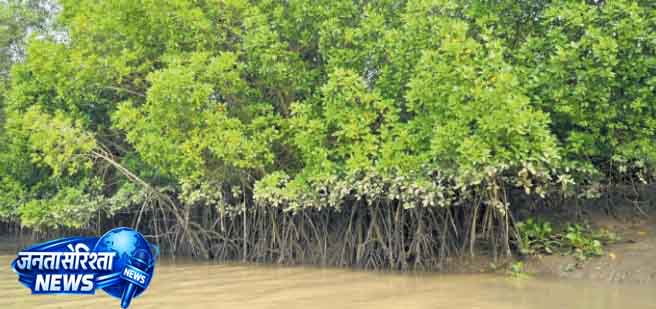
Kendrapara/Bhubaneswar: According to data from the India State of Forest Report (ISFR), mangrove cover in Odisha has increased by 16.6 percent over the past ten years, from 222 sq. km to 259.06 sq. km.
Kendrapara district alone has seen an increase of approximately 9.43 sq. km of mangroves. Across the state, mangrove cover has increased by 9.89 sq. km over the past four years, reflecting sustained conservation efforts and improved coastal ecosystem management. The state’s mangroves are spread across five coastal districts, with the Bhitarkanika National Park in Kendrapara alone covering over 212 sq. km, making it one of India’s most important mangrove ecosystems. With support from the Compensatory Afforestation Fund Management and Planning Authority (CAMPA), Odisha continues to expand and strengthen its coastal conservation efforts.
A major strength of Odisha’s approach is the integration of science-based monitoring with on-the-ground restoration. Data buoys installed by the National Centre for Sustainable Coastal Management under the Odisha Forestry Sector Development Project play a crucial role in maintaining the ecological balance necessary for mangrove growth in Bhitarkanika.
They help detect pollution and environmental stress, enabling timely intervention and strengthening long-term conservation efforts. “In addition to plantation, ecological restoration measures have also been addressed, such as deepening creeks to restore natural tidal flow, and targeted fencing to reduce human pressure,” said Varadaraj Gaonkar, Divisional Forest Officer (DFO) of the Mangrove Forest Division (Wildlife) in Rajnagar.
Odisha is also pursuing innovative restoration methods, such as the “fishbone channel” model, to restore degraded tidal zones. By restoring natural tidal flow, this technology has helped regenerate nearly 100 hectares of mangroves in Bhitarkanika over the past four years, boosting ecosystem resilience. The DFO of Rajnagar said, “Community participation has played a significant role in our success.
Residents are actively involved in plantation activities, which fosters a sense of ownership. Improved ecosystem health has also indirectly contributed to livelihoods, particularly through fisheries and related activities.”
The impact of these efforts is already visible on the ground. Uma Rani Giri, a resident of Kanaknagar village in the Rajnagar Forest Division, said, “Earlier, high waves would flood our village, breaking roads, submerging houses, and bringing crocodiles with the waves.
Now, the situation has improved significantly, bringing new hope and security to the community.”