
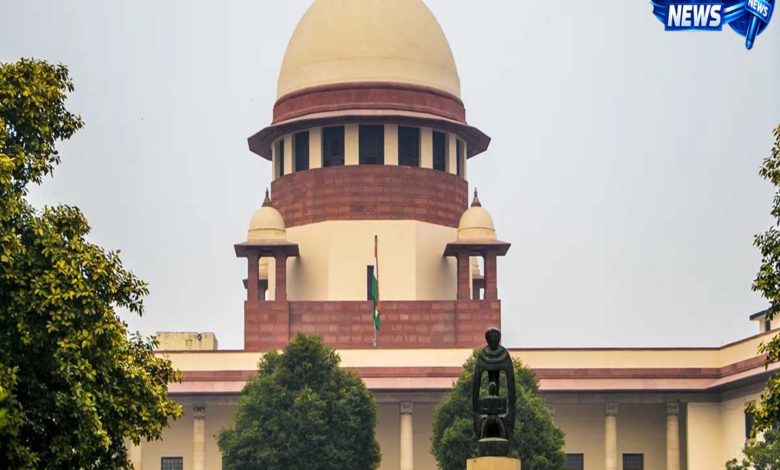
JHARKHAND: The Supreme Court has delivered a significant verdict in favor of Tata Steel regarding the Bhushan Steel case—one of the most high-profile matters concerning the country’s corporate and insolvency laws (IBC). The apex court clarified that once a company’s resolution plan is approved and the acquisition is completed under the Insolvency and Bankruptcy Code (IBC), the new buyer is to be considered free from past claims, liabilities, and disputes.
This observation by the court is considered crucial for corporate acquisitions and the insolvency resolution process. It is expected to provide legal clarity to investors and resolution applicants.
What is the Bhushan Steel case?
Bhushan Steel was one of the country’s leading steel companies, but it was referred to the insolvency process due to a financial crisis and massive debt. Subsequently, a bidding process was conducted under the IBC, in which Tata Steel emerged as the successful resolution applicant.
After obtaining the necessary legal approvals, Tata Steel acquired the company and resumed its operations. However, even after the acquisition, various petitions regarding past claims and legal disputes continued to arise.
What did the Supreme Court say?
In its verdict, the Supreme Court stated that once a company’s resolution plan is approved in accordance with the law and successfully implemented, the new buyer cannot be burdened with past liabilities and disputes.
The court observed that if old claims continue to be imposed on the new management even after the acquisition, no investor would show interest in purchasing distressed companies. This would undermine the fundamental objective of the IBC.
Court’s observation on the objective of the IBC
The Supreme Court acknowledged that the objective of the IBC is not merely debt recovery but also the revival of distressed companies.
If a successful resolution applicant has to face past disputes and uncertain liabilities, then—
The resolution process would be adversely affected.
Investor confidence would diminish.
Insolvency resolution would be delayed.
Economic activities would be negatively impacted. For this reason, the law emphasizes the concept of providing a “clean slate” to the successful buyer.
What relief did Tata Steel receive?
Following the verdict, Tata Steel has secured clear legal protection ensuring that the company cannot be held liable for old claims covered under the resolution plan.
This will provide the company with greater certainty regarding future business plans and investment decisions.
Why is this verdict significant for the industry?
According to legal experts, this ruling is not limited to just one company; it could serve as a guiding precedent for all major insolvency cases in the future.
This verdict could—
Boost investor confidence.
Facilitate the sale of distressed companies.
Make the resolution process more effective.
Increase the likelihood of faster resolutions for banks and financial institutions.
Impact on the banking and corporate sectors
Experts believe that a clear legal framework could increase the number of investors participating in the insolvency process. This could also aid in resolving the bad loans (NPAs) held by banks.
If resolution applicants are assured that past disputes will not hinder their business operations post-acquisition, they will be able to invest with greater confidence.
What are the legal implications?
This Supreme Court verdict reinforces the underlying spirit of the IBC: that a successful resolution applicant should not have to bear the indefinite burden of the previous management’s errors or past claims. However, this protection applies within the framework of the law and the provisions of the approved resolution plan. The facts of each case and court orders may vary.