
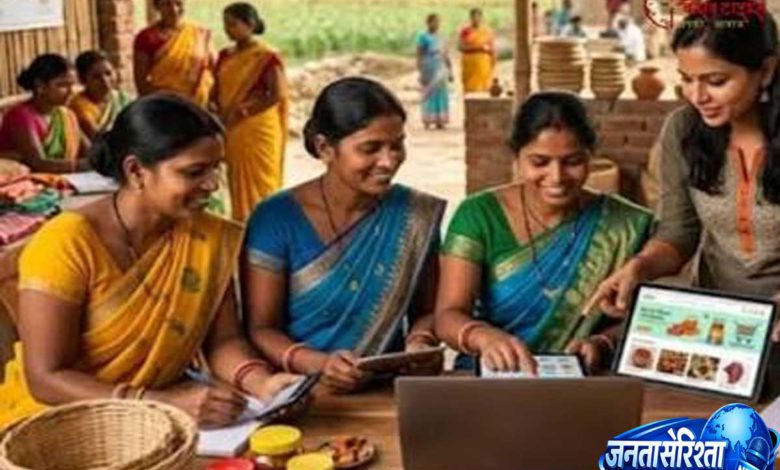
BIHAR : In a significant move towards the economic empowerment of rural women, a new self-employment scheme has been launched for women belonging to Self-Help Groups (SHGs) associated with JEEViKA. Under this scheme, ‘Jeevika Didis’ will have the opportunity to start small businesses within their own villages, with the government providing a subsidy of up to ₹60,000. The initiative aims to make rural women self-reliant, boost local employment opportunities, and strengthen the village economy.
The state government recognizes that while many women wish to start their own ventures, a lack of capital poses a major challenge. This subsidy scheme has been introduced to address this issue, enabling women to launch businesses without facing a heavy financial burden.
What is the objective of the scheme?
The primary objective of this scheme is to transform women associated with JEEViKA into entrepreneurs and reduce the need for them to leave their villages in search of employment in cities. The government envisions women developing sustainable sources of income within their own villages and strengthening their families’ financial standing.
The scheme will also promote small-scale industries, service-oriented businesses, and agriculture-related enterprises in rural areas. This will generate local employment and provide fresh momentum to the rural economy.
Subsidy of up to ₹60,000
Under the scheme, eligible ‘Jeevika Didis’ will receive a subsidy of up to ₹60,000 to start their self-employment ventures. The amount provided will depend on the nature of the business and eligibility criteria. Additionally, the women will be provided with necessary training, guidance on business operations, and financial support to ensure the successful running of their enterprises.
The government’s goal extends beyond merely providing financial aid; it aims to foster long-term self-reliance among women.
Which businesses are eligible for support?
‘Jeevika Didis’ can start a variety of businesses based on their interests and local requirements. Key sectors include—
Dairy and milk production
Goat rearing and poultry farming
Grocery stores
Tailoring and boutiques
Manufacturing of incense sticks (agarbatti), spices, and papads
Food processing units
Mushroom cultivation
Flower and vegetable farming
Digital Service Centers (CSC)
Handicrafts and cottage industries
Through these businesses, women can earn a regular income with low investment.
Who can avail the benefits?
The primary beneficiaries of this scheme will be eligible women belonging to Self-Help Groups (SHGs) associated with the Bihar Jeevika Mission. Applicants must be members of such a group and meet the prescribed eligibility criteria.
The application process can be completed through local Jeevika offices or relevant block-level officials. Required documents may include an identity card, Aadhaar card, bank account details, proof of group membership, and other necessary paperwork.
Training will also be provided
The government’s support will not be limited to financial aid alone. Beneficiaries will receive training in areas such as business management, marketing, bookkeeping, digital payments, product quality, and customer service. This will enable women to run their businesses successfully in the long run.
Boosting the rural economy
Experts believe that if a large number of ‘Jeevika Didis’ (women associated with the Jeevika mission) avail themselves of this scheme, new employment opportunities will be created in villages. Production of local goods will increase, women’s incomes will rise, and the economic status of rural families will be strengthened.
Furthermore, women’s social participation will increase, allowing them to play a more effective role in their families’ financial decision-making.
A major step towards women’s empowerment
This initiative by the Bihar government is considered a significant step towards promoting women’s entrepreneurship and building a self-reliant rural economy. The Jeevika model has already organized lakhs of women through Self-Help Groups, and this new scheme will now provide them with the opportunity to start their own businesses.
If the scheme is implemented effectively, thousands of rural women could become successful entrepreneurs in the coming years and earn a dignified livelihood within their own villages.