Karnal Dense fog reduced visibility, disrupting vehicular traffic.
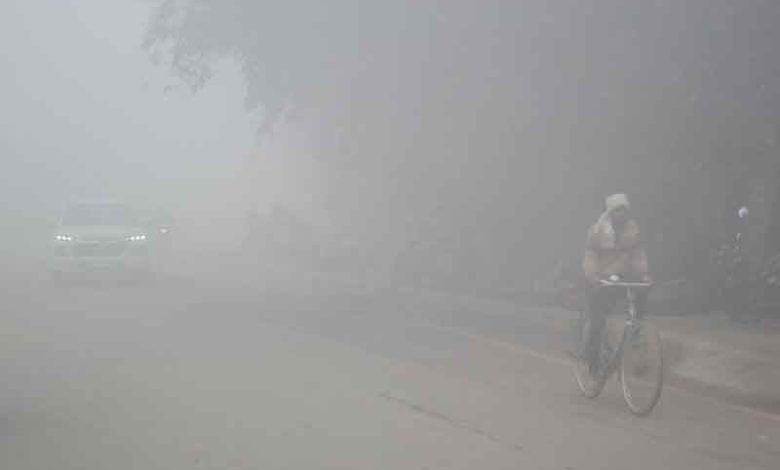
Dense fog blanketed the state on Friday morning and late evening, reducing visibility and intensifying the cold. This slowed down vehicular traffic on the roads and also affected train operations in several districts, causing difficulties for commuters, especially during the morning and late evening hours.
According to data from the India Meteorological Department (IMD), the average minimum temperature in the state increased by 1°C compared to Thursday. However, the temperature remained close to normal. The lowest minimum temperature of 5.5°C was recorded in Narnaul.
Other minimum temperatures included 8.9°C in Ambala, 6.1°C in Hisar, 8°C in Karnal, 7.8°C in Rohtak, 7.5°C in Bhiwani, 8.6°C in Sirsa, 8.3°C in Faridabad, 8.4°C in Gurugram, 6.1°C in Jind, 7.9°C in Kaithal, 6.3°C in Mahendragarh, 7.5°C in Mewat, 7.8°C in Panipat, and 6.2°C in Sonipat.
The average maximum temperature increased by 0.3°C, remaining close to normal for the state. The highest maximum temperature of 24.6°C was recorded in Palwal. The maximum temperature in Ambala was 19°C, Hisar (23.2°C), Karnal (18.2°C), Narnaul (18°C), Rohtak (20.3°C), Bhiwani (20.6°C), Gurugram (20.8°C), Kaithal (17.4°C), Karnal (18.7°C), Mahendragarh (22.2°C), Mewat (21.9°C), Sirsa (23.2°C), Sonipat (21°C), Yamunanagar (19.1°C), Bhiwani (24.1°C), Charkhi Dadri (23.2°C), Faridabad (23.8°C), and Jind (22.3°C). Given the possibility of dense fog in the coming days, the IMD has advised farmers to operate farm machinery cautiously in low visibility conditions. They have also been advised to wear warm clothes and drink lukewarm water while working in the fields, especially during the morning hours. For the wheat crop, which is in the tillering stage, they have been advised to irrigate during the afternoon and avoid early morning irrigation due to foggy conditions.
For the mustard crop, which is in the flowering stage, farmers have been advised to irrigate during the afternoon, ensuring that water does not accumulate in the fields.
Livestock farmers have been advised to keep their animals under sheds during the night and early morning. The animals should be provided with lukewarm drinking water and adequate ventilation without direct exposure to cold winds.
Scientists at the Indian Institute of Wheat and Barley Research (IIWBR), Karnal, said that the current cold conditions are beneficial for the wheat crop, and they expect a good yield if the cold weather persists.
Dr. Ratan Tiwari, Director of IIWBR, said that the cold weather is advantageous for the wheat crop. He added, “Farmers are advised to remain vigilant and monitor the health of their crops.”