
India demands review of UNSC resolutions; accuses Pakistan of misusing the forum.
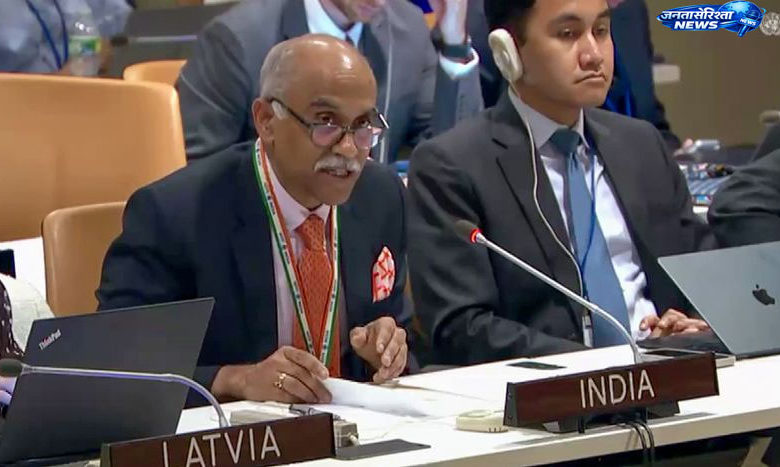
Jammu: India has called for a review of outdated United Nations Security Council (UNSC) mandates and resolutions. India maintains that the methods of mediation and peaceful settlement adopted under Chapter VI of the UN Charter cannot be considered permanently valid, as circumstances evolve over time. India further emphasized the need to re-examine these mechanisms in light of current global realities.
This issue was raised during an ‘Arria-formula’ meeting themed “Bridging the Implementation Gap: UNSC Resolutions and the Maintenance of International Peace and Security.” Addressing the meeting, India’s Permanent Representative to the UN, Ambassador Parvathaneni Harish, elaborated on the distinction between Chapter VI and Chapter VII of the UN Charter and highlighted their respective roles in maintaining international peace and security.
He noted that under Chapter VII, the Security Council takes direct and binding measures in situations involving threats to peace, breaches of the peace, or acts of aggression. The objective of these measures is to restore or maintain international peace and security. He added that a failure to implement such resolutions could lead to a rapid deterioration of the security situation and result in serious consequences.
In contrast, Chapter VI focuses on the peaceful settlement of disputes. It encompasses measures such as negotiation, inquiry, mediation, conciliation, and arbitration. It is designed to address disputes whose continuation could endanger international peace and security. India argues that since this framework was formulated based on the circumstances of a bygone era, periodic review and modification are essential.
In its address, India also stated that many older UN resolutions are no longer relevant to current conditions, necessitating their review and updating. India contends that the global political and security landscape has undergone significant changes, and the functioning of international institutions must evolve to reflect these shifts. Meanwhile, India launched a scathing attack on Pakistan, accusing it of politicizing the United Nations platform. India stated that Pakistan creates unnecessary controversy by repeatedly raising the Jammu and Kashmir issue at international forums, whereas this is India’s internal matter and efforts should be made to resolve it bilaterally.
India’s representative remarked that the purpose of international forums is to strengthen global peace and security, not to fuel bilateral disputes. He also indicated that such actions undermine the credibility and effectiveness of the United Nations.
India clarified its stance that Security Council resolutions need to be updated over time to remain effective in addressing current global challenges. Furthermore, India emphasized that the frameworks established for peace and security must be utilized in an impartial and balanced manner.
This statement comes at a time when numerous countries are consistently calling for reforms to the United Nations’ functioning, its decision-making processes, and the permanent and non-permanent structure of the Security Council. India, too, has long advocated for the reform and expansion of the Security Council to make it more representative and aligned with global realities.