
Farmers concerned over the non-release of irrigation water from the Mettur Dam’s East-West Canal.
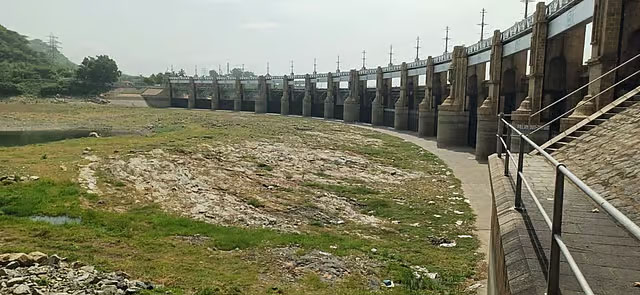
Salem (Tamil Nadu) | August 1st holds special significance for farmers in Tamil Nadu, as it is the day when water is traditionally released from the Mettur Dam’s East and West Bank canals for irrigation. However, this year, the farmers’ hopes have suffered a major setback. Water was not released from these canals on August 1st. The primary reason cited is the lack of adequate water storage in the dam and unsatisfactory inflow levels.
The news that water has not been released has caused concern among thousands of farmers in the Salem, Namakkal, and Erode districts. A large population in these districts depends on agriculture, and their farming activities rely on irrigation water supplied by the Mettur Dam’s East-West canal system. Consequently, there are fears that the delay in water supply will directly impact Kharif season crops.
Approximately 45,000 acres of agricultural land are irrigated via the Mettur Dam’s East and West Bank canals. The East Bank canal provides irrigation facilities for about 27,000 acres, while the West Bank canal covers an area of approximately 18,000 acres. This canal system has served as a lifeline for farmers for decades and is considered a crucial pillar of the region’s agricultural economy.
According to available information, the East Bank canal spans a total length of approximately 40.20 miles, whereas the West Bank canal travels a distance of about 27 miles before merging with the Cauvery River. These canals facilitate the irrigation of crops such as paddy, sugarcane, maize, vegetables, and other seasonal crops for thousands of farmers.
Water is usually released into the canals on August 1st, in accordance with a set schedule, enabling farmers to commence sowing and other agricultural activities on time. However, this year, the supply could not begin because the water storage in the Mettur Dam did not reach the expected level. Officials state that any further decision will be taken only after reviewing water availability in the dam and the rate of inflow.
The lack of water has heightened anxiety among the farmers. Many had already completed ploughing their fields and making preparations for sowing. They had hoped that agricultural activities would gain momentum once water began flowing into the canals from August 1st. However, the unavailability of irrigation water has raised concerns that farming operations could be adversely affected. A delay in releasing water could postpone the sowing of Kharif crops, potentially impacting overall production.
Agricultural experts emphasize that timely irrigation is crucial during the Kharif season. A water shortage in the initial stages can hinder crop growth; early irrigation is considered particularly essential for water-intensive crops like paddy. Consequently, farmers are now awaiting the next decision from the government and the Water Resources Department.
Local farmers state that their agricultural operations run smoothly only when they receive water from the Mettur Dam canals. A delay in releasing water would not only disrupt farming activities but could also impact their income. Many farmers have urged the administration to review the situation promptly and release water for irrigation.
Officials from the Water Resources Department are continuously monitoring the dam’s water levels and the rainfall forecast for the coming days. A decision regarding the release of water for irrigation could be made if water storage levels improve; however, no new date has been announced yet.
The Mettur Dam is a vital component of the irrigation system in the Cauvery basin. Water released from the dam plays a crucial role not only in agriculture but also in the region’s water supply system. Therefore, decisions regarding water management are made by balancing the needs for both drinking water and irrigation.
For now, thousands of farmers across the Salem, Namakkal, and Erode districts remain in a state of anticipation following the decision not to release water on August 1st. All eyes are now fixed on the next move by the government and the Water Resources Department. Farmers hope that once sufficient water is available in the dam, it will be released for irrigation through the East-West canals, ensuring the safety of their crops and allowing agricultural activities to proceed on schedule.