
Chandigarh After 27 years, High Court reinstates CISF constable dismissed in 1998
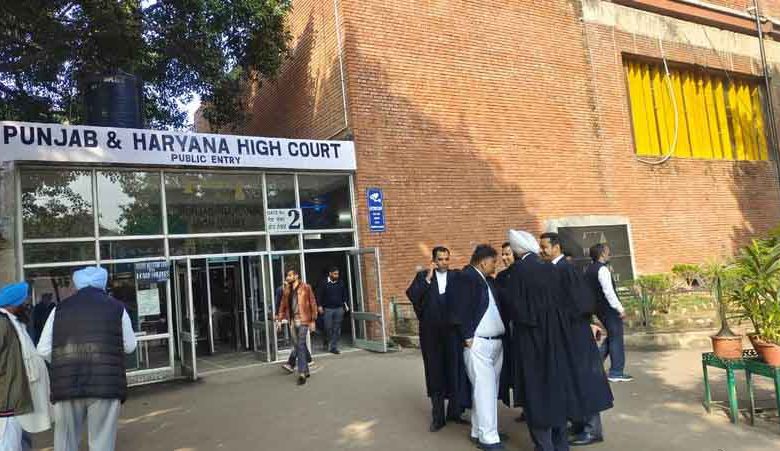
The Punjab and Haryana High Court has reversed the October 1998 dismissal order of CISF constable Ravinder Kumar Rana and ordered his reinstatement with full benefits, ending a service dispute that had been pending in court for over 25 years. The court stated that the disciplinary action was marred by contradictions, lack of evidence, and lack of due diligence.
The case stemmed from a 1998 disciplinary action. Rana’s initial petition was dismissed in limine, or at the last minute, in 2000. It was revived in 2001 when the Supreme Court remanded the case for a fresh hearing on the merits, leading to Justice Sandeep Moudgil’s decision nearly 27 years after the conviction.
Background
Rana, who joined the CISF in 1992, was suspended from service on June 14, 1998, on charges of assaulting a senior officer, misconduct, and habitual misconduct. Following a charge sheet dated July 8, 1998, an investigation was conducted in which ten witnesses were questioned. Based on the investigation report, the disciplinary authority dismissed him from service on October 5, 1998. His appeal was dismissed on May 28, 1999.
Court finds investigation fundamentally flawed
Dismissing both orders on the petition filed in 2000, Justice Moudgil, after just one hearing, stated that disciplinary action does not stand judicial scrutiny. The court stated that six out of ten witnesses did not support the allegations against the petitioner, “which casts doubt on the prosecution’s case, as the statements of these witnesses show significant contradictions with the prosecution’s case.”
Referring to the evidence, the court observed that multiple witnesses stated that “nothing untoward occurred.” Justice Moudgil’s court also addressed the petitioner’s complaint that medical evidence had been presented to substantiate the allegation of physical assault. The bench was told, “If the alleged assault had occurred in the barracks, the staff present nearby would have witnessed the incident and been able to give statements, yet no such evidence exists.”
Justice Moudgil said, “The wrongdoing on the basis of which the guilty employee was dismissed does not stand judicial scrutiny because it contains numerous contradictions. More importantly, the public prosecutor’s witnesses themselves failed to support the complainant’s case, making the impugned decision untenable in this court’s view.”
Court’s Analysis
Justice Moudgil stated that the investigating officer failed to consider the contradictory facts, failed to gather medical evidence, and considered all the allegations proven. The court stated, “This demonstrates that the investigation was conducted haphazardly, disregarding procedural safeguards, and with apparent discrimination, thereby affecting the petitioner’s right to a fair trial.” Justice Moudgil stated that relying on past disciplinary records to prove “habitual misconduct” also warrants judicial scrutiny. Past conduct may be a factor, but it cannot be used to override the evidentiary requirement in the present case. The court stated, “The petitioner’s service record was long and largely unblemished, and prior minor disciplinary actions, if any, would not constitute habitual misconduct. Past conduct may be considered, but when the current allegations are baseless, it cannot justify arbitrary or punitive removal.”
Final Directions
In allowing the petition, the court set aside the removal and appeal orders, and directed that Rana be reinstated with all consequential benefits, including arrears of salary and allowances, bearing interest at 6% per annum, and that this be ensured within four weeks.
Justice Moudgil said, “It has been found that the allegations against the petitioner were not supported by the testimony of most of the independent witnesses. The investigation lacked due diligence, as crucial facts were overlooked and essential evidence, including medical records, was not brought on record. Thus, the proceedings appear arbitrary, resulting in a penalty that is disproportionate to the full extent of the charges.”