
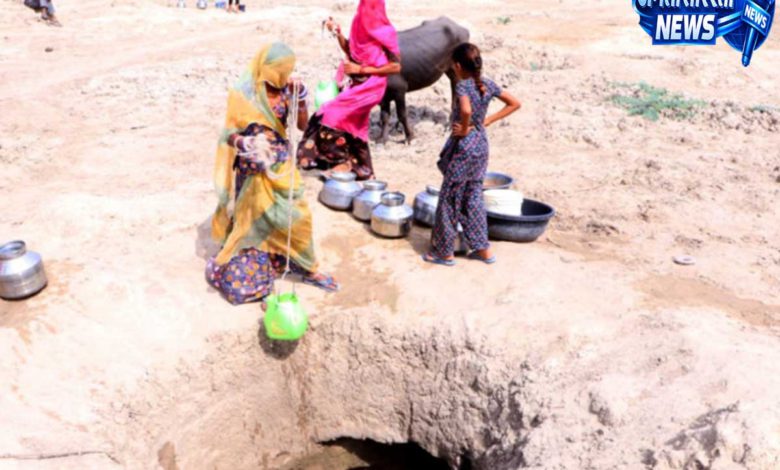
Patna: Despite the expenditure of crores of rupees aimed at providing clean drinking water to every household in Bihar, a large section of the population continues to struggle for access to pure water. Meanwhile, a report by the Comptroller and Auditor General (CAG) of India has raised serious questions regarding the functioning of the Public Health Engineering Department (PHED). The report highlights numerous irregularities concerning project implementation, financial management, and monitoring mechanisms.
The release of the report has heated up state politics. The opposition has accused the government of misusing public funds, while the government maintains that the points raised in the report will be reviewed and necessary corrective measures taken.
What did the CAG report reveal?
According to the CAG report, despite massive spending on drinking water schemes, many projects failed to reach completion on time. Some schemes remained unfinished, while in several locations, people did not receive a regular supply of clean drinking water even after the schemes had been launched.
The report also noted deficiencies in project monitoring, quality control, and timely execution, preventing the intended benefits of these schemes from reaching the general public.
Crores spent, yet the goal remains unfulfilled
According to the report, the government allocated substantial budgets to strengthen drinking water supplies in both rural and urban areas. Huge sums were spent on laying pipelines, establishing water supply centers, and constructing new schemes.
Despite this, in many areas, people still—
Do not receive clean drinking water.
Face persistent issues with irregular water supply.
Find that many schemes are not operating at full capacity.
Experience an acute drinking water crisis during the summer months.
Delays in projects
The CAG report also highlights that many projects were not completed within the stipulated timeframes. Delays in completion led to cost overruns and prevented beneficiaries from accessing the facilities on time.
Experts believe that delays in any infrastructure project not only escalate costs but also adversely affect the services delivered to the general public. Questions Regarding Quality Control
The report also raises questions about the quality of construction work and water supply systems. Deficiencies in the maintenance of pipelines, water tanks, and other structures were found in certain locations. Consequently, several schemes failed to operate at their expected capacity.
Weak Monitoring Mechanism
The CAG has highlighted the need to strengthen the project monitoring system. According to the report:
- Regular reviews of the work were inadequate.
- In many instances, inspections were not conducted on time.
- Discrepancies were found between progress reports and the actual ground situation.
- The process for fixing accountability was ineffective.
Impact on the Public
These shortcomings have most significantly affected people living in rural and remote areas. In many villages, residents still rely on handpumps, wells, or other alternative sources.
A lack of clean drinking water also increases the risk of health-related issues, particularly for children and the elderly.
Opposition Targets the Government
Following the release of the report, the opposition launched a scathing attack on the state government. Opposition leaders question why people are not receiving clean water despite the massive expenditure on these schemes. They have demanded an impartial inquiry into the entire matter and action against the officials responsible.
Government’s Stance
The government has stated that all points raised in the CAG report will be examined. Necessary improvements will be made where deficiencies were identified, and the monitoring system will be strengthened to prevent such issues from recurring in the future.
Expert Opinion
Water management experts believe that merely allocating a budget is insufficient. For the success of these schemes, equal attention must be paid to aspects such as:
- Time-bound implementation,
- Transparent financial management,
- Regular monitoring,
- Quality control,
- And local-level maintenance.
What Next?
The CAG report may now be discussed in the Legislative Assembly and relevant committees. Based on the issues raised, a response could be sought from the department, and a course of action for corrective measures determined. If effective action is taken regarding the shortcomings mentioned in the report, it could help improve the implementation of drinking water schemes and ensure better water supply to the people in the future.