
A major step towards reviving nine closed sugar mills in Bihar.
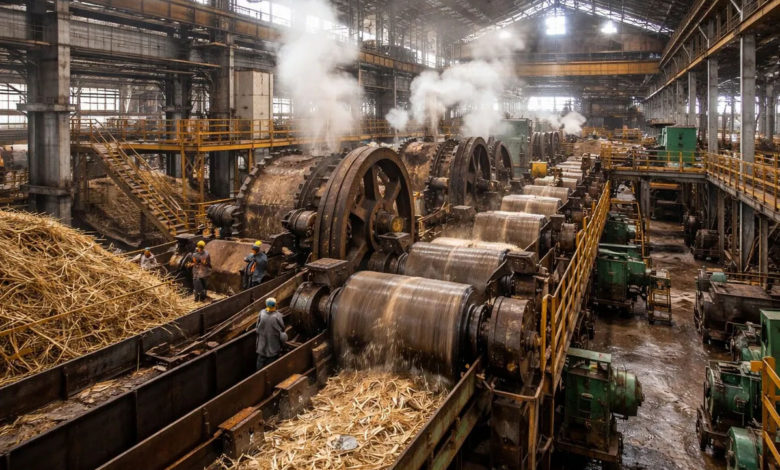
Patna: The Bihar government has taken a significant decision to restart the state’s long-defunct sugar mills. By amending the Sugar Undertakings (Acquisition) Act, the government has paved the way for transferring the land of these closed mills to private investors and cooperative societies. This decision is expected to accelerate the revival process of the nine closed sugar mills. The government believes that this initiative will not only revitalize the state’s sugar industry but also greatly benefit farmers, local youth, and the regional economy.
The state government had been working on a plan to restart these long-closed sugar mills for quite some time. Following the legal amendment, the ownership of the mill lands can now be transferred to private companies or cooperative societies. This removes the major legal hurdle faced by investors and paves the way for new investment.
The government has decided to restart a total of nine closed sugar mills in the state. Among these, the Sakri and Raiyam sugar mills will be operated through the Cooperative Department. The plan is to develop these two mills based on a cooperative model to ensure the direct participation of farmers. Meanwhile, the government will invite private investors to operate the remaining seven closed sugar mills. Processes such as issuing Requests for Proposals (RFPs) and other necessary formalities are likely to begin soon.
Until now, the ownership of the land belonging to the closed sugar mills rested with the Sugar Development Corporation. The Corporation had acquired these mills years ago and legally retained ownership of the land. Consequently, the land could not be transferred to any private investor or entity. With the government’s amendment to the Act, this obstacle has been removed, allowing land ownership to be transferred to investors or cooperative societies as required.
Officials from the Industries Department believe that the revival of the sugar industry in the state will generate large-scale employment opportunities. Restarting the mills is expected to provide direct and indirect employment to thousands of people. Additionally, it will boost sectors such as transportation, machinery, packaging, and other allied industries. This will accelerate economic activity in rural areas and inject new energy into local trade.
Sugarcane farmers are expected to reap the greatest benefits from the reopening of the sugar mills. Currently, many farmers are compelled to transport their produce to mills in other states, which drives up transportation costs and often results in delayed payments. If the state’s closed mills resume operations, farmers will have better opportunities to sell their sugarcane locally. This will not only boost their income but also increase their enthusiasm for farming.
Experts believe that Bihar holds significant potential for sugarcane production; however, this capacity remains underutilized due to the lack of a sufficient number of operational sugar mills. If the government’s plan succeeds, the state could once again establish itself as a major sugar-producing state in the country.
The government states that necessary facilities and a favorable industrial environment will be provided to attract investors. Emphasis will also be placed on developing new systems that incorporate modern technology, enhanced production capacity, and compliance with environmental standards. This will expand investment opportunities not only in sugar production but also in sectors such as ethanol, power generation, and other by-products.
According to economic experts, this initiative to revive closed industries could prove pivotal for Bihar’s industrial development. It is expected to boost private investment, strengthen the industrial base, and give a new direction to the rural economy. If the projects are implemented in a time-bound manner, significant changes could be witnessed in Bihar’s sugar industry in the coming years.
Overall, the amendment to the Sugar Undertakings (Acquisition) Act is considered a crucial and far-sighted decision by the Bihar government. It paves the legal way for transferring the land of nine closed sugar mills to investors and cooperative societies. The government hopes that this decision will revitalize the state’s sugar industry, provide farmers with a better market for their produce, create new employment opportunities for the youth, and accelerate Bihar’s industrial development.