
Drought crisis in 12 districts of Madhya Pradesh, Mohan government preparing to increase milk production
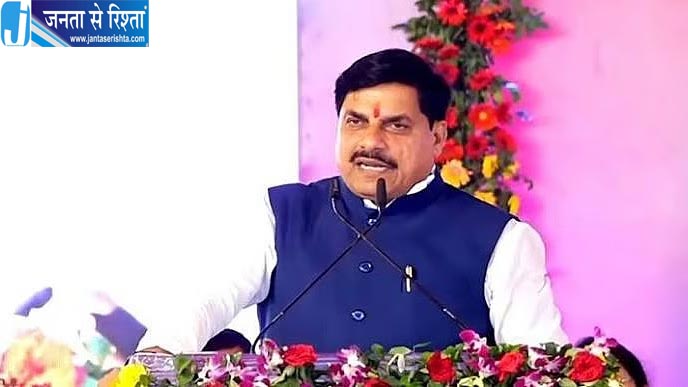
Bhopal. In light of drought conditions across 12 districts in Madhya Pradesh, the state government is planning to promote milk production to strengthen the economic activities of farmers and rural areas. Chief Minister Dr. Mohan Yadav indicated this while speaking to journalists in Bhopal on Saturday, stating that the government would place a special emphasis on milk production to address the drought situation. The districts affected by drought include Indore, Ujjain, Alirajpur, Dhar, Ratlam, Jhabua, Shajapur, Harda, Narmadapuram, Betul, Pandhurna, and Chhindwara. Consequently, the state government is considering ways to encourage activities such as animal husbandry and milk production alongside traditional farming.
During his discussion with journalists in Bhopal, Chief Minister Mohan Yadav addressed issues concerning agriculture and the farming community. He remarked, “Farming and the profession of being a farmer are two distinct concepts.” This statement is considered significant in the context of farmers’ livelihoods and agricultural-related activities. He suggested that steps could be taken to support the rural economy in drought-affected districts by boosting milk production.
The districts in Madhya Pradesh identified as drought-affected include Indore, Ujjain, Alirajpur, Dhar, Ratlam, Jhabua, Shajapur, Harda, Narmadapuram, Betul, Pandhurna, and Chhindwara. In these areas, those engaged in agricultural activities may face challenges related to weather conditions and water availability. Given this, the government’s focus on milk production is significant, as it points toward the development of alternative income sources for farmers.
The Chief Minister clarified that the state government is planning to promote milk production to cope with the drought conditions. However, specific details regarding the measures to be implemented under this plan have not yet been disclosed. Furthermore, there is no information available yet regarding any specific financial assistance, grants, or new schemes that the government might announce to boost milk production. In agrarian regions, farming and animal husbandry are deeply interconnected. A large number of rural households are engaged in both crop cultivation and livestock rearing. For such families, milk production can serve as a source of supplementary income. Consequently, initiatives to promote milk production—especially during conditions like drought—can be significant from the perspective of rural livelihoods.
However, increasing milk production requires adequate arrangements for animal fodder, water, and proper care. During a drought, ensuring the availability of these resources can be challenging. Therefore, the success of any plan to boost milk production will depend on its practical implementation and the availability of the necessary resources.
Chief Minister Mohan Yadav’s statement comes at a time when drought conditions have been reported in 12 districts of the state. In these districts, the importance of alternative economic activities for farming households is likely to grow. Milk production is one such activity that can be integrated with agricultural operations.
The list of affected districts includes Alirajpur, Dhar, Ratlam, Jhabua, and Shajapur, alongside districts like Indore and Ujjain. Similarly, drought conditions have also been reported in Harda, Narmadapuram, Betul, Pandhurna, and Chhindwara. Since local conditions may vary across these districts, it will be crucial to consider region-specific requirements when attempting to increase milk production.
While speaking to journalists, the Chief Minister drew a distinction between “farming” (crop cultivation) and the broader concept of a farmer’s livelihood. This observation may spark a discussion on the difference between specific agricultural activities and the comprehensive livelihood strategies of farmers. While farming primarily relates to the production of crops, a farmer’s livelihood may also encompass other activities, such as animal husbandry.
The plan to promote milk production appears to be rooted in this broader perspective. If farmers can generate income from milk production alongside their crop cultivation, they gain an additional source of earnings. However, the actual economic benefits can only be assessed based on the specific design of the scheme and local conditions.
This initiative could prove significant for districts in the state affected by drought, as agricultural activities are heavily dependent on weather patterns and water availability. In such times, focusing on alternative activities can help support the rural economy.
On the other hand, animal husbandry is also not entirely independent of natural conditions; livestock require water and fodder. Ensuring the availability of these resources during a drought will be essential. Therefore, alongside promoting milk production, it will be crucial to focus on resource management.
The Chief Minister’s statement suggests that the state government does not view the problem of drought solely in terms of crop production. The government is also exploring other avenues for farmers’ livelihoods, and the plan to promote milk production is one such proposed step.
However, it remains unclear whether the scheme will be implemented simultaneously across all 12 districts or rolled out in phases. Furthermore, no details have been provided regarding the budget, the number of beneficiaries, or the timeline for implementation.
The impact of any new scheme on farmers depends on how effectively the necessary resources and facilities are made available to them.