
Delhi Traffic Police takes action; 714 vehicles turned back
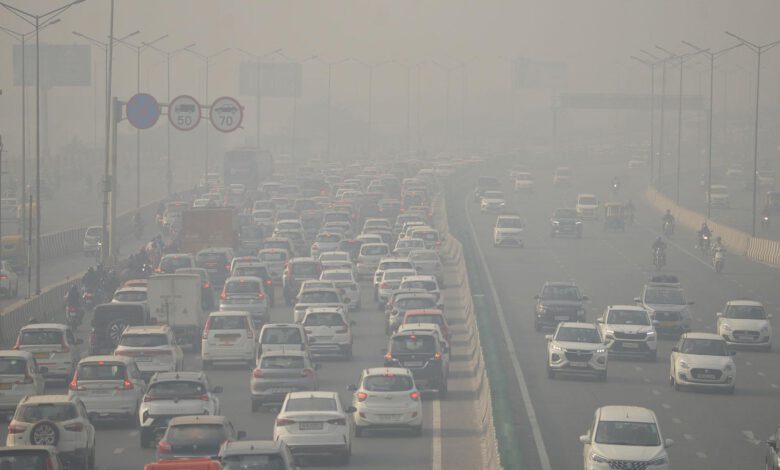
New Delhi. The traffic police has increased strictness to control the increasing air pollution in the national capital Delhi. Checking of vehicles has been intensified on the borders and major roads of Delhi to ensure compliance with the restrictions imposed under the ‘Graded Response Action Plan’ (GRAP). According to Delhi Traffic Police, a total of 7,279 vehicles were checked during the special drive on Sunday, November 1. Of these, 714 vehicles were returned due to not following the prescribed rules, while action was taken to confiscate 38 vehicles. It has been said that further action will be taken against vehicles violating pollution control rules.
Delhi Traffic Police said that the provisions of GRAP implemented with the aim of reducing air pollution in the capital are being strictly followed. For this, investigation campaign is being conducted at various entry routes and important places of the city. Particularly those vehicles are being monitored, whose entry or operation is prohibited under the applicable restrictions. The aim of the police is to ensure that restricted category vehicles do not enter Delhi and the rules prescribed for pollution control are followed.
In the operation conducted on Sunday, the police checked a large number of vehicles. According to official information, during the checking of a total of 7,279 vehicles, 714 vehicles were stopped from entering Delhi and sent back. Apart from this, 38 vehicles were seized. However, the category of vehicles seized and the specific reasons for the action taken against them are not detailed in the available information.
In view of the problem of pollution in Delhi, the role of traffic police becomes important. A large number of private vehicles, commercial vehicles, goods trucks and other modes of transport ply in the capital every day. In such a situation, smoke and emissions from vehicles are included in various sources of air pollution. The restrictions implemented under GRAP are intended to control certain sources of emissions in the event of increased pollution.
Delhi Traffic Police also held a coordination meeting with police officials of neighboring districts on Sunday to effectively enforce the restrictions. The objective of the meeting was to strengthen the investigation system on the borders of Delhi and establish better coordination between various police units. There is a large number of vehicular traffic from the districts adjacent to the capital. In such a situation, coordination between the officials of Delhi and surrounding districts is considered necessary for effective enforcement of the restrictions.
It has been informed that issues related to movement of vehicles, inspection system and compliance with rules will be discussed in the meeting. However, details of the specific decisions taken at the meeting have not been revealed. Delhi Police’s effort is to identify vehicles violating the applicable restrictions and take action against them as per rules.
The Graded Response Action Plan provides for imposition of restrictions at different levels depending on the severity of air pollution in the National Capital Region. Under this, measures are taken in different stages keeping in mind the condition of air quality. As pollution levels increase, restrictions related to vehicle operation, construction activities, industrial emissions and other polluting activities may be imposed.
There are four stages prescribed under GRAP. The first stage is poor air quality, the second stage is very poor, the third stage is severe and the fourth stage is related to extremely severe air quality conditions. At each stage, different measures are implemented as per the rules laid down. However, which restrictions are in effect on a particular day depends on the orders of the concerned authority.
The problem of air pollution often becomes severe with the onset of winter in Delhi. Pollution levels may increase due to changes in weather, reduction in wind speed and limited ability to disperse pollutant particles in the atmosphere. Apart from this, vehicle emissions, road dust, construction activities and other sources also affect air quality.
In such circumstances, the administration makes efforts at many levels to control pollution. The main responsibility of the traffic police is to ensure compliance with restrictions related to vehicles. Along with this, other concerned departments monitor the polluting activities falling within their jurisdiction.
The action of Delhi Traffic Police may impact commercial and other restricted category vehicles entering the capital. It is important for drivers to familiarize themselves with applicable restrictions and entry rules before embarking on a journey. Especially drivers coming to Delhi from other states should ensure that their vehicle is eligible for entry under the current rules.
Valid documents of vehicles, pollution control certificate and adherence to prescribed emission standards are also important for pollution control. If the rules are violated, action can be taken under relevant laws. However, the action against each vehicle is determined based on the nature of the violation and the orders in force.
At present, Delhi Traffic Police, while releasing the data of the campaign conducted on November 1, has clarified that surveillance has been increased to enforce GRAP restrictions. 7,279 vehicles checked, 714 vehicles returned and 38 vehicles seized in a single day.