
Second round of election contest in Brazil
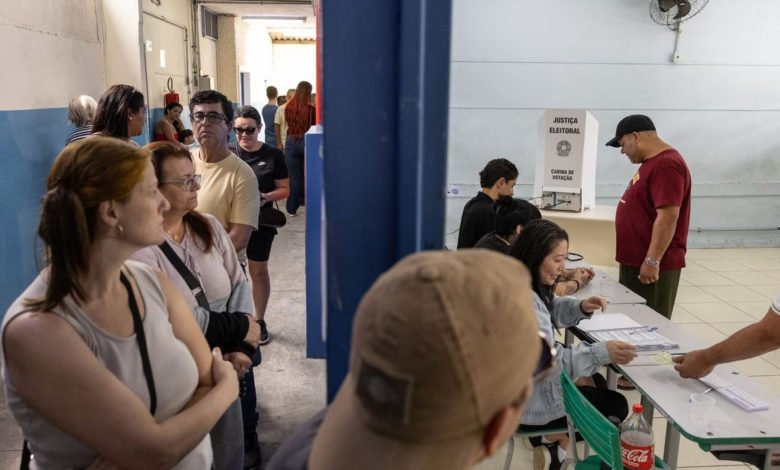
brasilia. In the Brazilian presidential election, after no candidate got the required majority in the first round, the contest has now reached the second round. Incumbent President Luiz Inácio Lula da Silva and right-wing senator Flavio Bolsonaro will face each other in the runoff to be held on October 25. After almost all the votes were counted, Flavio Bolsonaro got about 47 percent of the votes and Lula got about 45 percent. To win the first round in Brazil, it is necessary to get more than 50 percent of the valid votes.
Flavio Bolsonaro’s performance in the first round of results was better than many pre-election surveys had predicted. Some major polls before the vote had shown Lula in the lead in the first round, but after counting, Bolsonaro remained ahead with a slight lead. Now both the candidates will have to campaign again for the second round.
Lula, 80, is the leader of the Workers’ Party and is trying to win the presidency for a fourth, non-consecutive term. On the other hand, 45-year-old Flavio Bolsonaro is the son of former Brazilian President Jair Bolsonaro. He is a senator and is considered an ally of US President Donald Trump. This is the reason why in this election of Brazil, along with domestic issues, relations with America and Trump are also in discussion.
Issues like crime, inflation, corruption, public debt and rising cost of living remained prominent in the first round of election campaign. Despite improvements in some indicators of unemployment and inequality in Brazil, voters’ concerns about inflation, household debt and crime remain. Flavio Bolsonaro gave prominence to these issues in his campaign, while Lula highlighted his government’s social plans and economic achievements.
The issue of crime was especially discussed during the election campaign. Flavio Bolsonaro has supported a tough crackdown on crime. His election proposals included issues like taking strict action against organized criminal gangs. On the other hand, the Lula government has also had to face questions related to crime and security.
Corruption also remained at the center of the election debate. Both major political camps have faced separate allegations and controversies. In such a situation, the issue of corruption and political accountability is likely to become more acute in the second phase. In the election campaign, both the parties are continuously raising questions about each other’s political record.
US President Donald Trump’s name has also come up repeatedly in the Brazilian elections. Flavio Bolsonaro’s political closeness to Trump and his stance on relations with the US differentiate him from Lula. Lula’s foreign policy has emphasized strategic autonomy in relations with other global powers, including China, while maintaining relations with the United States. The Bolsonaro camp, on the other hand, is considered a supporter of closer relations with America.
Relations between Brazil and America were also in the news during the elections because there have been differences and talks between the two countries on many issues related to trade and security. Flavio Bolsonaro has talked about increasing economic and strategic cooperation with America. Lula, on the other hand, made Brazil’s sovereignty and independent foreign policy an important part of his election campaign.
After the results of the first round, Flavio Bolsonaro called it a sign of desire for change. Lula told his supporters that a new campaign would begin for the second round and he would put the performance of his government before the voters. It is clear from the reactions of both the leaders that Brazil will see vigorous election campaigning in the next three weeks.
The surveys before the first round also suggested that the contest in the second round could be close. In a Datafolha survey released on October 1, in the hypothetical second round, Lula had received 48 percent support and Flavio Bolsonaro had 45 percent support. However, due to the margin of error of two percent, the survey had declared the contest technically very close. Actual first-round results showed Bolsonaro performing better than polls predicted.
Now in the second round, the role of those voters who voted for other candidates in the first round will be important. The campaigns of both major candidates will try to reach out to such voters. However, it is too early to draw any definite conclusions regarding the final result of the second round.
According to Brazil’s electoral system, a candidate for the post of President is required to get more than 50 percent of the valid votes in the first round. If this does not happen, the two candidates getting the most votes advance to the second round. This time the same situation has arisen and the final vote will be held between Lula and Flavio Bolsonaro on October 25.
Brazil is the largest economy of Latin America and a country with a population of about 214 million. For this reason, the impact of the presidential election results will not be limited to domestic politics only. Brazil’s relations with the US and China, regional diplomacy, Amazon conservation, trade and economic policies will also be affected by the decisions of the next government.
About 15.9 crore people were eligible to vote in the first round. According to election officials, the voting process was conducted normally and no serious irregularities were reported on a large scale. Brazil has long used electronic voting systems.
Now the second round on October 25 will decide whether Lula will get another term in Brazil.