
Stricter measures against overloaded trucks: permission to proceed will not be granted even after paying the fine.
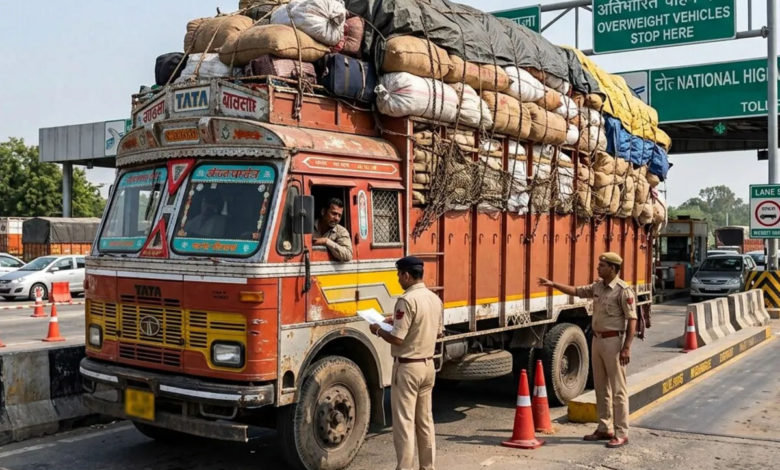
Uttar Pradesh. There are now preparations to tighten the screws on trucks and other heavy vehicles running on the country’s roads with goods exceeding the prescribed capacity. Vehicles found overloaded will now not be able to proceed further only by paying additional toll or fine. Such vehicles will be stopped on the spot and weighed again after unloading the excess load. The vehicle will be allowed to move forward only if the weight comes within the prescribed limit. Following the instructions of the Supreme Court, preparations are being made to implement this system effectively.
After the implementation of the new system, if any truck or heavy vehicle is found carrying more than the prescribed limit during checking at the toll plaza or on the road, then merely charging a fine will not be enough. The vehicle will have to be stopped there and the extra luggage will be unloaded. After this the vehicle will be weighed again. He will be allowed to travel further only if his weight meets the norms.
Presently, at many places, overloaded vehicles are allowed to move forward after collecting additional fee or fine. Due to this, vehicle owners and drivers continue traveling with extra load despite paying the fine. The purpose of the new system is to stop this situation. Payment of fine will not be seen as permission for the overloaded vehicle to proceed.
Following the instructions of the Supreme Court, the concerned agencies will have to ensure strict adherence to the rules to prevent overloading. The responsibility of agencies related to road transport system and employees deployed at toll plazas may also increase. After checking the weight of the vehicle, if it is found to exceed the prescribed capacity, it will be stopped from moving immediately.
Overloading has been a major problem in road transport for a long time. Heavy vehicles carrying more than the prescribed carrying capacity put additional pressure on roads and bridges. The possibility of damage to the road surface due to such vehicles also increases. Apart from this, heavy and unbalanced load can create problems for the driver in controlling the vehicle.
The role of weight checking will be most important in the new system. Heavy vehicles will be weighed at the toll plaza or designated checking point. If the weight of any vehicle exceeds the prescribed limit, then additional toll or fine action will be taken against it as per rules. Even after this the vehicle will not be allowed to move forward immediately.
The driver or vehicle operator will have to unload the extra luggage. After the weight is reduced, the vehicle will have to be taken back to the weighing machine. In the second test, only if the weight of the vehicle is found to be within the prescribed limit, it will be allowed to proceed. In this way, along with penalty against overloading, arrangements will be made to reduce the actual load on the spot.
With this decision, vehicle owners and transporters transporting goods will also have to take special care of the prescribed weight limit while loading goods in their vehicles. In case of sending a vehicle with goods exceeding its capacity, the vehicle may be stopped on the way. This may lead to delay in delivery of goods and additional expenses.
To make the system effective, use of weighing facilities at toll plazas and other checking points will be important. The concerned authorities will have to ensure that the weight is checked properly and vehicles found overloaded are not allowed to move without shedding the excess weight.
Strictness on overloaded vehicles can also have a direct impact on road safety. Overloading can affect the braking ability and control of trucks and other heavy vehicles. There is a risk of an overloaded vehicle becoming unbalanced during sudden braking or turning. In such a situation, ensuring freight transportation as per the prescribed capacity can help in reducing the risk.
Control over overloading is also considered important for the safety of roads and bridges. The weight limit for heavy vehicles is decided keeping in mind the road and the capacity of the vehicle. Continuous movement of overloaded vehicles can lead to problems like quick deterioration of the road and increased maintenance costs.
The biggest change in the new system will be that paying fine will not become a way to continue overloading. If the load on any vehicle exceeds the prescribed limit, it will have to be reduced. The vehicle will be able to continue its journey only after unloading the excess weight and re-weighing.
If this system is implemented effectively after the direction of the Supreme Court, control over the movement of overloaded trucks and heavy vehicles can increase across the country. With this, transporters will have to adhere to the weight limit in advance and drivers will also have to ensure that they follow the rules during checking.
At present, it has come to light that the process of making the system effective at the relevant level is moving forward. After its implementation, it will not be possible for overloaded vehicle drivers to get away just by paying fine or additional toll. The vehicle will be able to move forward only when its extra weight is removed and on re-check the weight is found to be within the prescribed limit.