
Panchayat orders social boycott if love marriage is done in Hisar village
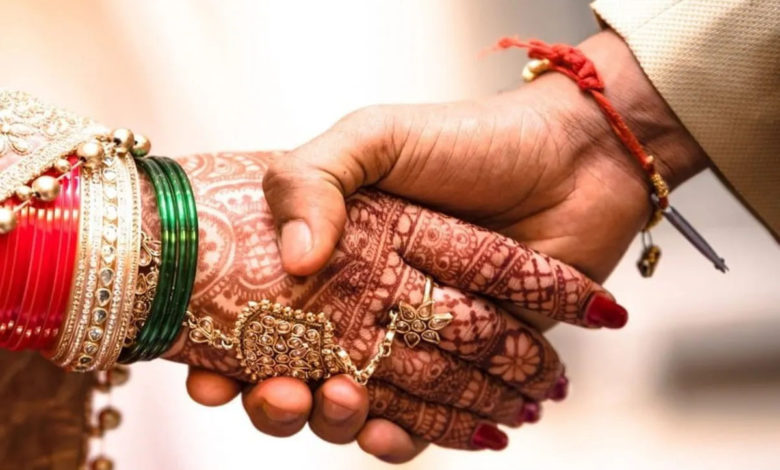
Hisar: A decision by a social panchayat regarding love marriages in Arya Nagar village, Hisar district, Haryana, has sparked a fresh debate. A resolution was passed during the social panchayat meeting opposing love marriages between a young man and woman from the same village. The resolution calls for the social boycott of such couples and prohibits them from residing in the village. Furthermore, the resolution includes provisions for the social boycott of family members or others who support such marriages. However, the elected village panchayat has distanced itself from this decision.
According to reports, approximately one thousand villagers attended the social panchayat held on Sunday. The meeting was presided over by village elder Kulwant Gosla. Discussions focused on instances of love marriages that had come to light in the village in recent months. A section of villagers demanded a halt to such marriages, arguing that they violated the village’s traditional social order. Subsequently, the social panchayat passed the resolution.
It is reported that three such marriages have taken place in the village over the past few months. Two of these involved couples from different castes, while one involved a couple from the same caste. These incidents intensified discussions on the subject within the village, leading to the convening of the social panchayat to deliberate on the issue collectively.
The panchayat’s resolution stated that if a young man and woman from the village marry each other in contravention of social norms, they will face social boycott. Some reports indicate that the resolution also calls for barring such couples from living in the village. Additionally, a proposal was made to extend the boycott to individuals who assist or support couples entering into love marriages.
However, there are discrepancies across various reports regarding certain details of the matter. In one report, local BJP leader Hanuman Verma denied the existence of a formal resolution for social boycott, stating instead that the villagers had collectively decided to discourage love marriages within the village. Conversely, other reports explicitly mention proposals for social boycott and barring couples from residing in the village. Consequently, conflicting claims persist regarding the exact nature of the decision. Regarding the matter, the village’s elected Sarpanch, Ratan Singh, stated that the decision was made by the social panchayat and that the elected Gram Panchayat played no role in it. It has been reported that a proposal to form a committee and conduct door-to-door interactions to gauge the villagers’ opinions has also been put forward.
A section of the villagers argues that all girls in the village are regarded as daughters or sisters. They maintain that marriages between young men and women from the same village are not considered in line with local social traditions. Those associated with the panchayat claimed that the decision aims to preserve the village’s social fabric and mutual relationships.
On the other hand, questions are being raised regarding the legal aspects of this decision. Kamal Anand, a senior advocate at the Punjab and Haryana High Court, told the Hindustan Times that adults have the right to choose their life partners under Article 21 of the Constitution, and orders such as social boycotts issued by a social panchayat hold no legal validity. According to him, legal action could be initiated if situations involving threats or coercion arise.
In India, adult men and women have the right to marry of their own volition within the framework of the law. Therefore, a proposal by a social organization or panchayat does not automatically translate into a legal prohibition. This very distinction between social traditions and individual rights has made this entire matter a subject of debate.
The police are also monitoring the situation. Hisar Superintendent of Police Siddhant Jain stated that he would look into the matter and ensure the safety of such couples. Regarding a recent marriage case, the police reported that the concerned family raised no objections to the couple, and they are free to live as they wish.
The Arya Nagar case is now being discussed on social media as well. Some people support the panchayat’s move, citing the village’s social traditions, while others view it in the context of the personal freedom of adults and their right to choose a life partner. Some young people on social media have also opposed the decision.
For now, the social panchayat’s proposal has intensified the debate—ranging from the village level to the state level—regarding love marriages, social traditions, and individual rights. On one hand, a section of villagers advocates upholding traditional beliefs, while on the other, the law grants adults the right to choose their own life partners. Given this context, the resolution passed by the social panchayat in Arya Nagar is likely to remain a topic of discussion in the days to come.