
Low market prices and expensive pesticides have compounded the difficulties faced by tomato farmers.
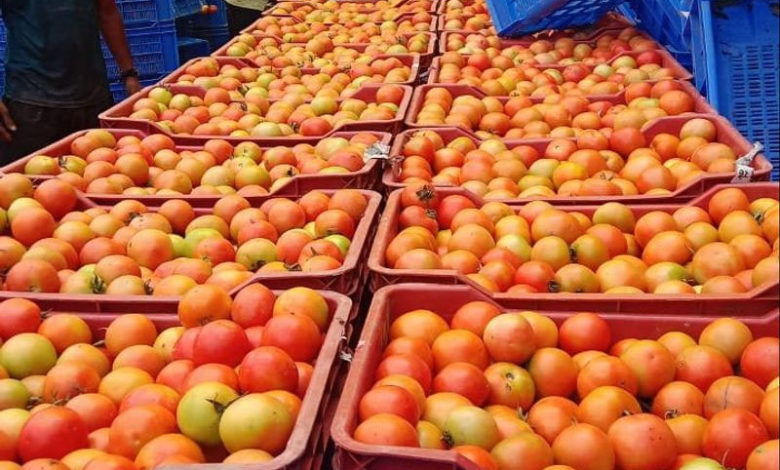
Solan. Tomato farmers in Himachal Pradesh are facing a double whammy this season. On one hand, market prices for tomatoes are falling short of expectations, while on the other, production costs have surged due to the continuous rise in the prices of pesticides and crop protection chemicals. Farmers state that despite purchasing expensive pesticides, they often fail to yield the desired results, further driving up the cost of protecting the crop.
According to farmers arriving at Solan’s Agricultural Produce Marketing Committee (APMC) to sell their produce, the biggest challenge in tomato farming right now is the widening gap between costs and income. Cultivation expenses are constantly rising, yet market prices for the produce are not keeping pace. Consequently, farmers are finding it increasingly difficult to even recover their production costs from the tomato crop.
Farmers explain that protecting tomato crops from various pests and diseases requires frequent pesticide spraying, necessitating the purchase of costly chemicals. However, many farmers have found that certain pesticides are ineffective against pests like whiteflies and mites. This forces them to purchase and apply chemicals again, further escalating farming expenses.
Crop Damage Caused by Whiteflies and Mites
Farmer Pal Singh Thakur stated that some pesticides available in the market have proven ineffective against pests such as whiteflies and mites. According to him, these pests have damaged not only tomato crops but also vegetable crops like cucumbers and beans.
Farmers note that an infestation of whiteflies and mites stunts plant growth and can compromise crop quality. While farmers use pesticides in a timely manner to control these pests, an ineffective pesticide results in both crop damage and increased expenses.
Pal Singh Thakur mentioned that despite using certain pesticides from a Mumbai-based company, he did not get the expected relief from whiteflies and mites. Farmers allege that they are forced to spend large sums on pesticides, yet the results are often unsatisfactory.
Rising Costs Upset the Financial Balance
Tomato cultivation involves expenses across several categories, including seeds, fertilizers, irrigation, labor, transportation, and pesticides. Farmers state that farming-related costs have steadily increased over recent times. In particular, the rising prices of pesticides and other agrochemicals have intensified the financial burden on vegetable growers.
According to farmers, periodic spraying of pesticides is essential to protect the crop from pests. If weather conditions are unfavorable or pest infestations become severe, the frequency of spraying increases, directly impacting production costs.
Conversely, when market prices for tomatoes are low, farmers are compelled to sell their produce at reduced rates. This narrows the margin between production expenditure and market earnings. Farmers warn that if market prices do not align with production costs, tomato cultivation could become financially unviable for them in the future.
Impact on Both Quality and Yield
Farmers face not only the challenge of rising costs but also concerns regarding the impact of pest infestations on crop quality and yield. For a cash crop like tomatoes, fruit quality plays a crucial role in determining market prices. If pest or disease issues compromise fruit quality, the likelihood of securing a good price in the wholesale market diminishes.
A large number of farmers in the Solan region rely on vegetable cultivation. Beyond tomatoes, crops such as cucumbers, beans, and other vegetables serve as vital sources of income. Consequently, the fact that the same types of pests are affecting multiple crops has become a matter of serious concern for the farming community.
Farmers Demand Effective Pesticides
Farmers have urged the Agriculture Department to verify the quality and efficacy of pesticides available in the market. They argue that action should be taken against any pesticide that fails to perform according to established standards. Farmers should be provided with pesticides that are effective against the specific pests in question and whose quality is assured.
Farmers also state that they require technical guidance regarding the correct use of pesticides and the identification of pests affecting their crops. Often, farmers use various pesticides but fail to achieve the desired results due to a lack of knowledge about the specific pest and the appropriate chemical to use.
Focus on Market Prices
Meanwhile, farmers are closely monitoring tomato prices at the Solan APMC. They seek a price for their produce that not only covers production costs but also yields a reasonable profit. They warn that if market prices remain low while cultivation costs continue to rise, it could impact the acreage dedicated to tomato farming in the coming season.
Farmers argue that the government needs to step up monitoring of the price and quality of agrochemicals while simultaneously establishing effective mechanisms to ensure they receive fair market prices for their produce.
Currently, tomato growers in Solan are grappling with a triple challenge: low market prices, rising production costs, and increasing pest infestations. Farmers hope that the Agriculture Department and relevant agencies will address their concerns and take concrete steps to ensure the availability of effective pesticides and secure fair market prices for their crops.