
Women street vendors are facing the heat, livelihoods are under threat in Manipur.
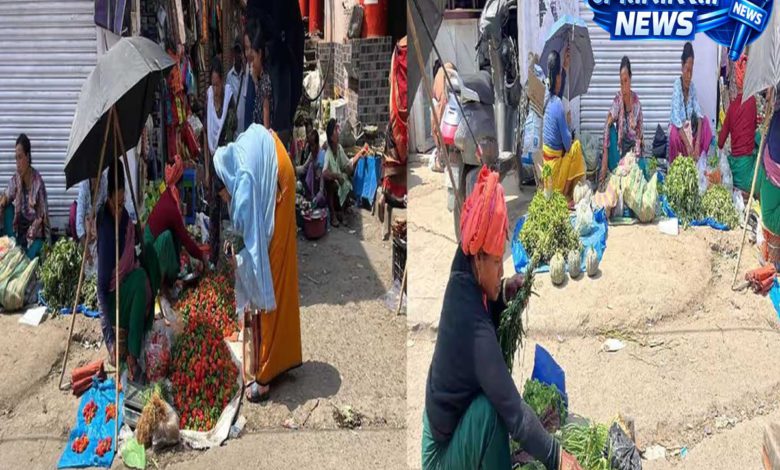
Manipur: The effects of climate change are becoming increasingly visible in Manipur, where rising temperatures are reshaping daily life and placing new pressures on vulnerable communities. Among those feeling the impact most acutely are thousands of women street vendors who spend long hours outdoors, exposed to extreme weather while struggling to secure a livelihood.
For many of these women, climate change is not an abstract environmental concern but a daily reality measured in exhaustion, declining earnings, rising expenses and growing health risks.
Manipur, known for its temperate climate, scenic hills and lush valleys, has historically enjoyed relatively moderate weather conditions. However, changing climatic patterns, coupled with urban expansion, deforestation and increasing carbon emissions, have contributed to a noticeable rise in temperatures across the state.
While the effects are felt across society, those dependent on outdoor work are among the most exposed. Women street vendors, many of whom belong to economically vulnerable households, continue to work under direct sunlight even during the hottest hours of the day, driven by the need to provide for their families.
At a roadside near Khwairamband Ima Market in Imphal, 40-year-old Khwairakpam Roma begins her day long before sunrise. A resident of Thanga Ithing in Bishnupur district, she leaves home around 4 a.m. and often does not return until evening.
For more than a decade, Roma has sold dry fish along the roadside, a trade that remains the primary source of income for her family. The distance from her village makes multiple trips impossible, forcing her to remain at her vending spot throughout the day regardless of weather conditions.
Armed with only a small umbrella for protection, Roma spends hours under the sun. She says the heat has become increasingly difficult to endure.
According to her, physical exhaustion now sets in much faster than it did a few years ago. Episodes of dizziness and occasional fainting have become part of her working life. Fellow vendors often help her recover by moving her to shaded areas and providing water and rest.
Yet stepping away from work is rarely an option.
Roma says the challenges facing vendors have multiplied in recent years. The growth of online retail platforms has reduced customer footfall, while ongoing social and economic disruptions have further strained incomes. At the same time, the cost of essential commodities continues to rise.
Her daily expenses, including transportation, food and drinking water, amount to around ₹400. On most days, she earns between ₹700 and ₹1,000, leaving little room for savings or emergencies.
A similar story unfolds across the city’s markets and roadside vending areas.
Thounaojam Premila, a 59-year-old vegetable vendor from Mutum Phibou in Imphal West district, has spent nearly 25 years in street vending. Every morning, she wakes up at 3 a.m. to purchase vegetables from wholesalers before beginning her day’s sales.
To avoid the most intense heat, she takes a break during midday hours and resumes work in the afternoon. Even so, the rising temperatures continue to affect her business.
Vegetables exposed to prolonged heat wilt quickly and lose their freshness. Customers generally prefer fresh produce, leaving vendors with little choice but to sell deteriorating stock at reduced prices. The result is a direct financial loss that further erodes already narrow profit margins.
Premila continues working despite her age and family responsibilities. Her husband is bedridden due to multiple illnesses, and although her children are grown, economic pressures leave her with few alternatives.
To reduce costs, she stays in a temporary market shelter near Khwairamband Ima Market and returns home only once a week. However, one expense she cannot avoid is drinking water.
During the summer months, she spends between ₹30 and ₹50 every day on bottled water—an amount that may appear modest but represents a significant burden for someone surviving on small daily earnings.
Other women vendors report similar experiences. A fruit seller operating along BT Road said fatigue, sleeplessness, dizziness and exhaustion have become frequent health concerns. To remain functional during long working hours, she regularly consumes electrolyte drinks and water to prevent dehydration.
According to the Road Side Vendors’ Welfare Association Manipur (RSVWAM), the situation has become increasingly alarming.
Association president Kshetri Tama says prolonged exposure to heat, coupled with sudden episodes of heavy rainfall, hailstorms and strong winds, is affecting both the health and incomes of women vendors.
She noted that incidents of heat-related fainting have become common. On many days, five to six women vendors reportedly lose consciousness after spending extended periods under the sun.