
Odisha CM applauds Union Budget 2026–27
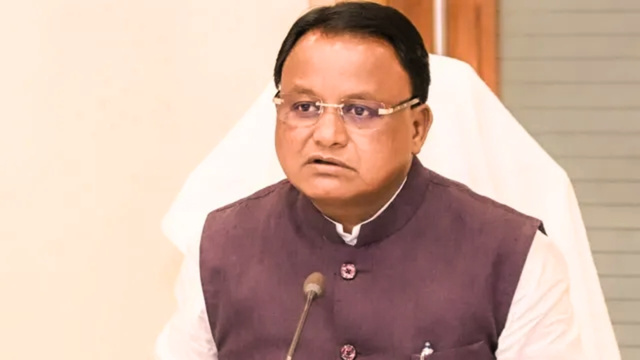
Sonepur: Reacting to the Union Budget 2026–27 presented by Finance Minister Nirmala Sitharaman, Odisha Chief Minister Mohan Charan Majhi said the budget reflects a clear, decisive vision for inclusive growth, youth empowerment, and a self-reliant India.
The Chief Minister said that it has given emphasis on skill development of youth in various fields. The aim is to create skills among them that can compete globally. As a result, the youth society will become self-confident and contribute to the development of the country. This is truly a youth-centric budget.
“To continue the economic growth of the country, the Modi government has brought about 350 structural reforms during its tenure, which is a rare chapter in the economic history of independent India. With this, our goal of building a self-reliant India, a developed India has been accelerated,” he added.
In the Union Budget 2026-27, Rs 12.2 lakh crore has been allocated for public capital expenditure (CAPEX) along with more allocation for infrastructure development. “We are grateful to the Government of India for announcing many initiatives for Odisha in this Union Budget,” he mentioned.
Some of the key initiatives are:
Rare Earth Corridor for Odisha: The Union Government has announced the establishment of a dedicated Rare Earth Corridor in Odisha to build mining, processing, research and manufacturing capacity for rare earth minerals. The objective is to reduce import dependency of essential minerals, promote local industry and support high-tech sectors including electronics and renewable energy.
East Coast Development Corridor includes tourism and economic hubs on the east coast – Odisha is likely to benefit due to its coastal geography and economic connectivity. A total of 5 tourism destinations will be created in 5 eastern states (i.e. Bihar, Jharkhand, West Bengal, Odisha and Andhra Pradesh) and 4000 e-buses will be provided for public transport.
20 new national waterways will be operational in the next five years, as part of which NW-5 will be implemented in the first phase. NW-5 will connect the mineral rich regions of Talcher and Angul with major industrial and port hubs like Paradip and Dhamra in Odisha, which will help in efficient and affordable freight movement, thereby reducing the logistical pressure on the road and rail networks. The objective of this initiative is to enhance sustainable inland water transport, enhance connectivity for bulk goods (like minerals and industrial goods) and strengthen Odisha’s role as a logistics and industrial hub on the eastern coast.
As a new initiative, “City Economic Regions” will ensure urban-led economic growth and will attract regional urban clusters. It is proposed to allocate Rs 5000 crore per CER in the next five years for the development of these regions. CERs are designed as integrated urban growth zones to harness the economic potential of the city and its surrounding areas by improving infrastructure, services and investment connectivity. This will help in implementing the proposed Bhubaneswar-Cuttack-Paradip-Puri urban corridor.
Turtle Trails will be developed near major turtle nesting sites in the states including Odisha, Karnataka and Kerala to promote wildlife tourism and environmental protection. This nature-based tourism scheme in the budget will focus on eco-friendly tourism infrastructure.
A major change has been made in the Mahatma Gandhi National Rural Employment Guarantee Act (MGNREGA) to cater to the needs of a developing India. Under the new scheme, the Developed India – Employment Guarantee and Livelihood (Gramin) (VB-G RAM G scheme), a statutory guarantee of 125 days of employment per rural household has been provided, which has been increased from the earlier 100 days. The share ratio between the Centre and the States in this scheme is 60:40. For the year 2026-27, the Central Government’s share of the total requirement of Rs. 1,51,000 crore has been estimated to be Rs. 95,692 crore and the expenditure has been provided in the Budget. As an interim measure, the Union Budget has included separate allocations for both the old MNREGA (Rs. 30,000 crore) and the new VB-G RAM G scheme (Rs. 95,692 crore) so that the States can implement the new scheme in a systematic manner.
In coastal states like Odisha, schemes and support measures have also been announced for coconut, cashew and sandalwood as part of high value-added agriculture to increase farmer income, productivity and rural employment. A coconut incentive scheme is aimed at increasing coconut production and productivity. The scheme will focus on major coconut producing states and will include measures such as replacing old, unproductive trees with high yielding varieties to increase farmer income.
Rs 34,300 crore has been spent on the mining sector in seven years through the National Critical Minerals Mission (NCMM) to secure and make available critical minerals like lithium. The major measures include Rs 16,300 crore for the critical minerals value chain, new “Rare Earth Corridors” in four states to reduce dependence on imports and Rs 35,000 crore for coal gasification.
Major Schemes and New Schemes Announced in Union Budget, 2026-27: Some of the major centrally sponsored schemes which have received higher allocations than the previous year are –
Krishonnati Yojana (₹11,200 crore)
Jal Jeevan Mission (₹67,670 crore)
Viksit Bharat – Guarantee for Rozgar & Ajeevika Mission (Gramin) (₹95,692 crore)
Total Education (₹42,100 crore)
PMAY Urban (₹18,625 crore)
PMAY Rural (₹54,917 crore)
National Health Mission (₹31,820 crore)
National Rural Livelihood Mission (₹19,200 crore)
Some of the major Central Sector Schemes which have received the highest allocation are:
PM Kisan (₹63,500 crore)
Pradhan Mantri Garib Kalyan Anna Yojana (PM-GKAY)(₹2,27,429 crore)
PM-Surya Ghar: Muft Bijli Yojana (₹22,000 crore)
Pradhan Mantri Viksit Bharat Rozgar Yojana (₹20,083 crore)
The new initiatives announced are:
Viksit Bharat-Guarantee for Rozgar and Ajeevika Mission (Gramin): (₹95,692 crore)
PM Setu (₹6,141 crore)
Scheme for Allied Healthcare Professionals (AHP) (₹1000 crore)
₹40,000 crore in 5 years under Electronics Component Manufacturing Scheme (ECMS)
Biopharmaceuticals with an outlay of ₹10,000 crore in the next 5 years
Chemical Park (₹600 crore)
Infrastructure Risk Guarantee Fund (₹1000 crore)
MSME Growth Fund (₹500 crore)
“I am sure that the provisions in the current budget will make Odisha prosperous – It will help in achieving the goal of developed India. This is a historic budget from all points of view, said the Chief Minister while answering the questions of the media at this press meet held in Sonepur.
He said that for the development of industry in the state, we are giving importance to 16 sectors and emphasis is being given to industry in all the districts of the state. We are focusing on establishing textile units in districts like Balangir, Kalahandi and Sonepur where cotton is grown the most. In the districts where there is potential for industry, emphasis will be given to establishing that industry in the district.